

What is the minimum operating temperature for Gr 7 Titanium Sheet?
May 26, 2025
Leave a message
As a supplier of Gr 7 Titanium Sheet, I often receive inquiries from customers about the minimum operating temperature for this specific titanium alloy. Understanding the temperature limits of Gr 7 Titanium Sheet is crucial for various industries, including aerospace, chemical processing, and marine applications. In this blog post, I will delve into the details of the minimum operating temperature for Gr 7 Titanium Sheet, explore its properties, and discuss its implications for different applications.
Properties of Gr 7 Titanium Sheet
Gr 7 Titanium Sheet is a titanium alloy that contains 0.12 - 0.25% palladium, which enhances its corrosion resistance in reducing acids and chloride-containing environments. This alloy is known for its excellent weldability, formability, and high strength-to-weight ratio. These properties make Gr 7 Titanium Sheet a popular choice for applications where corrosion resistance and durability are essential.
Minimum Operating Temperature
The minimum operating temperature for Gr 7 Titanium Sheet depends on several factors, including the specific application, the mechanical properties required, and the environmental conditions. In general, Gr 7 Titanium Sheet can be used at temperatures as low as -269°C (-452°F), which is close to absolute zero. However, at extremely low temperatures, the mechanical properties of the alloy may change, and it is important to consider these changes when designing components for cryogenic applications.
Mechanical Properties at Low Temperatures
At low temperatures, the strength and hardness of Gr 7 Titanium Sheet generally increase, while its ductility and toughness may decrease. This phenomenon is known as cold embrittlement, and it can lead to brittle fracture if the material is subjected to high stresses. Therefore, when using Gr 7 Titanium Sheet at low temperatures, it is important to ensure that the design takes into account the potential for cold embrittlement and that appropriate safety factors are applied.
Corrosion Resistance at Low Temperatures
The corrosion resistance of Gr 7 Titanium Sheet is generally maintained at low temperatures. However, in some cases, the formation of ice or frost on the surface of the material can lead to localized corrosion, especially in the presence of chlorides or other corrosive substances. To prevent this, it is important to ensure that the surface of the Gr 7 Titanium Sheet is clean and dry, and that appropriate protective coatings or treatments are applied if necessary.
Applications at Low Temperatures
Gr 7 Titanium Sheet is commonly used in applications where low temperature performance is required, such as cryogenic storage tanks, liquid natural gas (LNG) processing equipment, and aerospace components. In these applications, the alloy's high strength-to-weight ratio, excellent corrosion resistance, and good weldability make it an ideal choice.
Cryogenic Storage Tanks
Cryogenic storage tanks are used to store liquefied gases, such as liquid oxygen, liquid nitrogen, and LNG, at extremely low temperatures. Gr 7 Titanium Sheet is often used in the construction of these tanks due to its ability to maintain its mechanical properties and corrosion resistance at low temperatures. The high strength-to-weight ratio of the alloy also helps to reduce the weight of the tanks, which is important for transportation and installation.
LNG Processing Equipment
LNG processing equipment, such as heat exchangers, valves, and pipelines, operates at low temperatures and is exposed to corrosive environments. Gr 7 Titanium Sheet is a suitable material for these applications because of its excellent corrosion resistance and good mechanical properties at low temperatures. The alloy's weldability also makes it easy to fabricate and install in LNG processing plants.
Aerospace Components
Aerospace components, such as aircraft fuel tanks, hydraulic systems, and structural parts, are often subjected to low temperatures during flight. Gr 7 Titanium Sheet is used in these applications because of its high strength-to-weight ratio, excellent corrosion resistance, and good fatigue resistance at low temperatures. The alloy's ability to maintain its mechanical properties at low temperatures also helps to ensure the safety and reliability of aerospace components.
Comparison with Other Titanium Alloys
When considering the minimum operating temperature for Gr 7 Titanium Sheet, it is also important to compare it with other titanium alloys, such as Gr 5 Titanium Sheet and Gr 23 Titanium Sheet.
Gr 5 Titanium Sheet
Gr 5 Titanium Sheet, also known as Ti-6Al-4V, is one of the most widely used titanium alloys. It has a higher strength than Gr 7 Titanium Sheet, but its corrosion resistance is not as good in reducing acids and chloride-containing environments. Gr 5 Titanium Sheet can be used at temperatures as low as -253°C (-423°F), which is slightly higher than the minimum operating temperature for Gr 7 Titanium Sheet.
Gr 23 Titanium Sheet
Gr 23 Titanium Sheet, also known as Ti-6Al-4V ELI, is a high-purity version of Gr 5 Titanium Sheet. It has similar mechanical properties to Gr 5 Titanium Sheet, but its ductility and toughness are better, especially at low temperatures. Gr 23 Titanium Sheet can be used at temperatures as low as -269°C (-452°F), which is the same as the minimum operating temperature for Gr 7 Titanium Sheet.
Conclusion
In conclusion, the minimum operating temperature for Gr 7 Titanium Sheet is approximately -269°C (-452°F), which makes it suitable for a wide range of applications at low temperatures. However, it is important to consider the potential for cold embrittlement and to ensure that the design takes into account the changes in mechanical properties at low temperatures. When choosing a titanium alloy for a specific application, it is also important to compare the properties of different alloys, such as Gr 5 Titanium Sheet and Gr 23 Titanium Sheet, to determine the most suitable material.

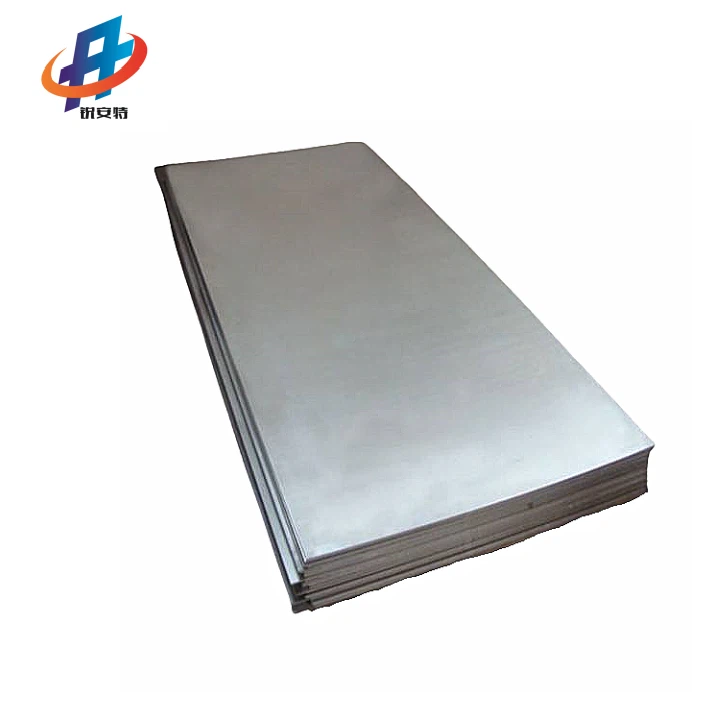
If you are interested in purchasing Gr 7 Titanium Sheet or have any questions about its minimum operating temperature or other properties, please feel free to contact us for further information and to discuss your specific requirements. We are committed to providing high-quality titanium products and excellent customer service.
References
- ASM Handbook Volume 2: Properties and Selection: Nonferrous Alloys and Special-Purpose Materials.
- Titanium: A Technical Guide, Second Edition by John C. Williams.
Send Inquiry