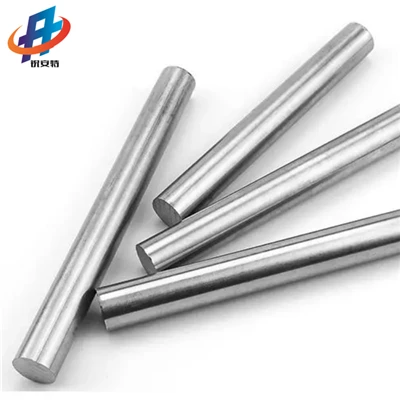
Your Professional Titanium Bar Supplier


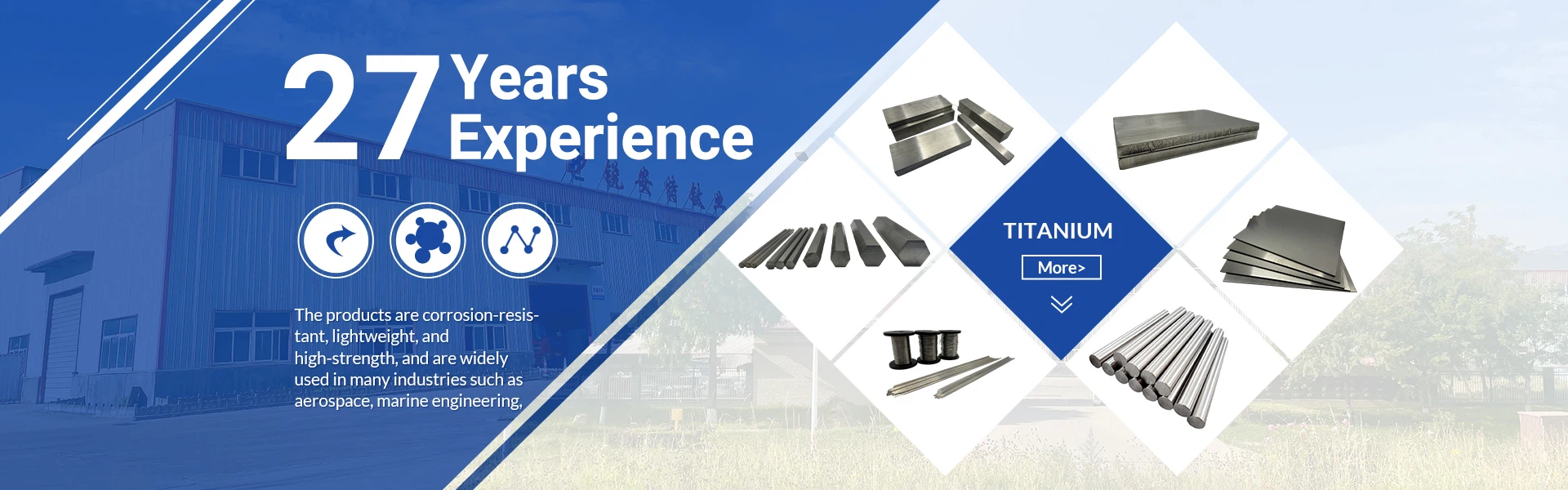
Established in 1997, Baoji Ruant Titanium Industry Co., Ltd. has a history spanning 27 years. Since its inception, the company has concentrated on the development, production, processing, and sales of non-ferrous metals, with a particular emphasis on titanium and titanium alloy materials. Initially, it primarily provided processing services for major companies such as Baoji Titanium Industry Co., Ltd., State Nuclear Baoji Zirconium Industry Co., Ltd., Western Materials, and the Northwest Research Institute. Through years of accumulation and development, it has gradually developed unique core competencies, establishing itself as a leading enterprise in the industry.


Why Choose Us
 

Customized Service
The company maintains a substantial inventory of various products with several specifications and brands in stock. Custom design and production services are available to meet customer requirements, adhering to relevant domestic and international industry standards.


Sales Market
It is exported to many countries and regions including Japan, Britain, France, the United States, Malaysia, etc., with annual export volume reaching 20 million US dollars.


Our Certifications
ISO9001 quality management system
Industrialization integration management system
Weapons and equipment quality management system (GJB9001C-2017) Additionally, the company is set to receive the aviation quality management system (AS9100:2016) certification in August this year.


Our Factory
The company's premises cover an area of 20,366.46㎡, including a factory area of 10,812㎡. The total investment is approximately 86 million yuan, the company boasts five production workshops equipped with advanced production equipment and technology.


First 1234 Last
 

Tensile Properties


Grade

Tensile strength (min)

Yield strength (min)

Elongation (%)

Ksi

MPa

Ksi

MPa

Grade 1

35

240

20

138

24

Grade 2

50

345

40

275

20

Grade 3

65

450

55

380

18

Grade 4

80

550

70

483

15

Grade 5

130

895

120

828

10

Grade 7

50

345

40

275

20

Grade 9

90

620

70

438

15

Grade 12

70

438

50

345

18


Size Tolerances


Diameter (mm)


>15~20

>20~35

>35~50

>50~80

>80~125

>125~150

>150~200


Hot forged bar tolerances (mm)

±1.5

±2.0

±2.5

±3.0

±3.5

±5.0

±6.5


Hot extruded bar tolerances (mm)

+0.8,-1.0

±2.0

±2.5

±2.5


Hot rolled bar tolerances (mm)

+0.7, -0.5

+1.2, -0.5

+1.5, -1.0

+2.0, -1.0

+2.2, -1.2

–

–


Specifications


Product

Titanium bar

Size

Customized

Material

C.P. Titanium, Ti-6Al-4V, Ti-6Al-4V ELI, Ti-5Al-2.5Sn, Ti-3Al-2.5V, Ti-15333, Ti-38644, Ti-6Al-7Nb, Ti-662, Ti-6242, Ti-1023, Ti-4322 and Ti-0.2Pd etc.

Standard

ASTM B348, ASTM F136, ASTM F67, AMS 4928, etc.

Surface

Grinding, machining

Shape

Rectangular Titanium bar, Hexagonal Titanium bar, Square titanium bar, etc.


Advantages of Titanium Bar
Gr 5 Titanium Round Bar
ASTM F136 Titanium Round Bar
Gr 23 Titanium Round Bar
Gr 1 Titanium Round Bar

Low density
Titanium bars are remarkably lightweight (approximately 60% lighter than iron) which not only means they are easy to work with but makes them a great choice for aerospace and other high-performance applications where every bit of weight matters.


Strength
Despite being lightweight, titanium is just as strong as steel and can be strengthened by alloying and deformation processing. Thanks to their low density and ability to withstand extreme temperatures, titanium bars are commonly used for aircraft, spacecraft and missiles.


Resistance to corrosion
Whether it’s used indoors or outdoors, titanium is a metal that will last several years because a thin layer of oxide forms on the surface and makes it difficult for materials to penetrate. This means titanium bars are ideal for buildings and marine applications.


Biocompatible
Whilst some metals (i.e. iron, steel and aluminium) can be toxic to humans, this isn’t the case with titanium. As a result of being biocompatible with human tissues and bones, titanium can be safely inserted into the body – either to strengthen broken bones or for dental implants – without causing an adverse reaction.


Good thermal resistance
When compared with other metals, titanium has a low coefficient of thermal expansion which means it won’t contract or expand anywhere near as much when put under extreme pressure. This is why titanium bars are frequently used in the construction industry where a rigid yet lightweight framework is desirable.


High melting point
Titanium bars have an exceptionally high melting point of 1668°C – approximately more than 400°F than steel and 2000°F above aluminium – which makes them suitable for an array of high-temperature applications.


Uses of Titanium Bars


Medical applications
Titanium rods play a vital role in the medical field, especially in orthopedics. Orthopedic surgeons prefer titanium alloy rods for bone replacement due to their excellent strength and stability. These rods are used to replace fractures, providing patients with a strong and reliable support.


Aerospace applications
The aerospace industry relies heavily on titanium rods due to their high strength-to-weight ratio and ability to withstand extreme temperatures and conditions. Titanium rods are an integral part of aircraft structures and shells, including fuselages, landing gear components, and engine parts. They are also vital in space exploration vehicles and satellites because they are lightweight and resistant to extreme temperatures, ensuring reliability and performance in demanding conditions.


Automotive applications
In the automotive field, titanium rods are essential to improve vehicle performance, especially in high-performance racing cars and luxury cars. Titanium rods help reduce weight, improve fuel efficiency, and increase engine performance. Due to their excellent resistance to corrosion and fatigue, titanium rods are also used in exhaust systems and suspension components, helping to extend the life and reliability of automotive parts.


Sports applications
Titanium rods are widely used in sports equipment, providing athletes with a lightweight and durable option to improve sports performance. They can be used in bicycle frames, golf clubs, and hiking gear, where their low density makes them easier to carry without compromising on strength. This combination of lightness and durability helps athletes achieve better performance while maintaining the reliability of their equipment.


Marine applications
Titanium rods are extremely valuable in marine environments due to their excellent resistance to saltwater corrosion. They are used in boat hulls, propeller shafts, and underwater pipes to provide long-lasting durability and reliability. This makes them ideal for critical marine structures and equipment that must withstand harsh conditions.


Industrial equipment
In industrial settings, titanium rods are used in chemical processing equipment, offshore oil rigs, and power plants. Their resistance to corrosion and high temperatures make them suitable for demanding industrial applications, ensuring long service life and low maintenance requirements.


Electronics
The electronics industry takes advantage of the non-magnetic and durable properties of titanium rods. They are used in consumer electronics such as smartphones and laptops, where their rugged properties ensure the longevity and reliability of electronic devices.


Architecture and Design
Titanium rods are also used in architectural structures and sculptures for their beauty, corrosion resistance, and durability. They offer a modern, stylish look while providing the structural integrity required for long-lasting architectural projects.


Types of Titanium Bars
 
01/

Cp grade 2 titanium bars
CP Grade 2 titanium bars are made of commercially pure titanium and are the most widely used type of titanium bar. Grade 2 CP titanium has good weldability, formability, and corrosion resistance. It is often used in chemical processing and marine applications..

02/

Cp grade 3 titanium bars
CP Grade 3 titanium bars are made of commercially pure titanium and are similar to CP Grade 2 titanium bars in terms of weldability, formability, and corrosion resistance. However, CP Grade 3 titanium has slightly higher strength and is often used in aerospace applications.

03/

Titanium grade 5 bars
Titanium Grade 5, or Ti-6Al-4V, is a commonly used titanium alloy. It is composed of 90% titanium, 6% aluminium, and 4% vanadium. One popular form of Titanium Grade 5 is the Titanium Grade 5 Bar. Hot rolling or forging the alloy into a cylindrical shape will manufacture these bars. They are widely used in aerospace, medical, automotive, and marine industries.

04/

Titanium grade 7 bar
Titanium Grade 7 Bar is another popular form of titanium alloy. Grade 7, also known as Ti-0.2Pd, is a corrosion-resistant alloy containing 99.2% pure titanium and 0.2% palladium. This combination of elements provides Grade 7 with enhanced resistance to corrosion in various environments, including highly oxidizing and reducing conditions.

05/

Alloyed titanium bars
Alloyed titanium bars are made of an alloy of titanium and another metal, such as aluminium or vanadium. These bars are stronger than CP-grade titanium bars and are often used in high-strength applications such as aircraft construction.

06/

Beta titanium bars
Beta titanium bars are made of an alloy of titanium and other metals, such as molybdenum or zirconium. They have excellent flexibility and can be used in various applications that require high strength and flexibility, such as biomedical implants.


Payment & Delivery time


Payment method

TT, L/C

Payment

≤1000 $

100% in advance

≥1000 $

30% T/T in advance, balance before shipment

Delivery time

5-7 days

If the goods are in stock

15-20 days

If the goods are not in stock, it is according to quantity


packing & Delivery


productcate-400-297
productcate-400-297
productcate-400-297


FAQ


Q: Are you a factory or trading company?

A: We are a professional manufacturer and have many years production and management experience.

Q: Can you make the product with my design?

A: Yes, we can, we supply customized service. You can send us all the details of what you need, then we will provide detailed quotation.

Q: How much does a bar of titanium weigh?

A: Titanium weights about 4.5 grams per cubic centimeter. So, measure your bar, determine how many cubic centimeters it is and multiply that by 4.5 to get its weight in grams.

Q: Can I get a sample to check your quality?

A: Yes, you can.

Q: How are titanium bars manufactured?

A: Titanium bars are typically produced through a process called hot rolling, where the titanium is heated and passed through rollers to shape it into a bar.

Q: What's the MOQ for your production?

A: 1KG or 1 pcs.

Q: What are the lightest titanium bars?

A: Apollo Titanium Bars are the most sought-after and lightest scooter bars on the market. We have developed these bars to be super light and super strong. Reducing the weight of your handlebars can shave kg's off the weight of your scooter improving your trick ability, especially Barspins and Tailwhips.

Q: What are titanium bars used for?

A: Titanium round bars can be used for a variety of applications such as aerospace components, medical implants, chemical processing equipment, sports goods, architectural elements, shipbuilding components and even automotive parts.

Q: Are you in stock?

A: Yes, we have many of sizes in stock.

Q: What's your terms of delivery?

A: FOB/EXW/CFR/DAP/Door to door....

Q: Are titanium bars worth it?

A: Longevity and durability are less vain reasons to choose titanium. Of the three materials, carbon is the most susceptible to damage in a crash, and aluminum has the shortest fatigue life. Titanium has a longer fatigue life than aluminum and is less vulnerable in a crash than carbon.

Q: How long do titanium rods last?

A: Nowadays, after years of testing, it has been proven that of all the metal implants in the human body and for various reasons, titanium implants are the most suitable type. The main reason for using titanium is that it can last for up to 20 years.

Q: What's the terms of shipping?

A: By air/ sea/railway/DHL/Fedex/UPS...

Q: What's the payment and the delivery time?

A: Payment≤1000 $, 100% in advance. Payment≥1000 $, 30% T/T in advance, balance before shipment. Generally it is 5-7 days if the goods are in stock or it is 15-20 days if the goods are not in stock, it is according to quantity.

Q: Do you have after-sales service?

A: Of course, you can contact us at any time. We promise our products are all qualified. If you find any products are not qualified and unsatisfied your require, please contact us at any time.

Q: Can titanium bars be welded?

A: Yes, titanium bars can be welded using specialized techniques like gas tungsten arc welding (GTAW) or electron beam welding (EBW).

Q: Are titanium bars magnetic?

A: No, titanium bars are non-magnetic, which makes them suitable for applications where magnetic interference needs to be minimized.

Q: Can titanium bars be machined?

A: Yes, titanium bars can be machined, but they have a tendency to work harden, so special tools and techniques are required.

Q: How do titanium bars resist corrosion?

A: Titanium forms a protective oxide layer on its surface, which acts as a barrier against corrosion, even in harsh environments.

We're professional titanium bar manufacturers and suppliers in China, specialized in providing high quality customized service. We warmly welcome you to buy titanium bar for sale here and get quotation from our factory. For price consultation, contact us.

Gr5 Titanium Forging Disc, Gr 9 Titanium Round Bar, Gr 1 Titanium Hexagonal Bar

Send Inquiry