

What is the hardness of BT20 Titanium Plate?
Jul 14, 2025
Leave a message
Hey there! As a supplier of BT20 Titanium Plate, I often get asked about the hardness of this amazing material. So, let's dive right in and explore what makes BT20 Titanium Plate so hard and why it matters.
First off, let's understand what hardness means in the context of metals. Hardness is a measure of a material's resistance to deformation, indentation, or scratching. It's a crucial property, especially in applications where the material needs to withstand wear, abrasion, and high-stress conditions.
BT20 Titanium Plate is an alpha-beta titanium alloy. This alloy composition gives it some unique properties, including its hardness. The alpha phase in titanium alloys is hexagonal close-packed (HCP), which provides good strength and stability. The beta phase, on the other hand, is body-centered cubic (BCC), and it can be heat-treated to improve the alloy's ductility and workability. The combination of these two phases in BT20 Titanium Plate results in a material that is both strong and hard.
The hardness of BT20 Titanium Plate is typically measured using the Rockwell hardness test or the Brinell hardness test. The Rockwell hardness scale is commonly used for metals and measures the depth of penetration of an indenter under a specific load. The Brinell hardness test, on the other hand, uses a hard ball indenter to create an indentation on the material's surface, and the hardness is calculated based on the diameter of the indentation.
In general, the hardness of BT20 Titanium Plate can vary depending on several factors, such as its heat treatment, the thickness of the plate, and the specific manufacturing process. After proper heat treatment, BT20 Titanium Plate can achieve a Rockwell hardness of around 32 - 38 HRC (Rockwell C scale). This level of hardness makes it suitable for a wide range of applications, from aerospace components to medical devices.
Let's take a look at some of the applications where the hardness of BT20 Titanium Plate shines. In the aerospace industry, components need to be lightweight yet strong enough to withstand the extreme conditions of flight. BT20 Titanium Plate's hardness and high strength-to-weight ratio make it an ideal choice for parts like aircraft frames, landing gear components, and engine parts. Its resistance to corrosion also ensures that these components can last for a long time in harsh environments.
In the medical field, BT20 Titanium Plate is used in orthopedic implants. The hardness of the material allows it to support the body's weight and resist the forces exerted during normal activities. At the same time, its biocompatibility ensures that it doesn't cause any adverse reactions in the human body.
Now, let's compare BT20 Titanium Plate with some other popular titanium alloys in terms of hardness. For example, OT4 Titanium Sheet is a pure titanium sheet. While pure titanium is relatively soft compared to BT20 Titanium Plate, it has excellent corrosion resistance. OT4 Titanium Sheet is often used in applications where corrosion resistance is the primary concern, such as in chemical processing plants.
Gr 12 Titanium Sheet is an alpha-beta titanium alloy similar to BT20. However, the composition of Gr 12 is slightly different, which results in different mechanical properties. Gr 12 Titanium Sheet has a good combination of strength, ductility, and corrosion resistance. Its hardness is also in a similar range to BT20, but the specific values can vary depending on the heat treatment and manufacturing process.
Gr 5 Titanium Sheet, also known as Ti-6Al-4V, is one of the most widely used titanium alloys. It has a higher strength and hardness compared to BT20 in some cases. Gr 5 Titanium Sheet is commonly used in aerospace, marine, and automotive applications due to its excellent mechanical properties.
So, why should you choose BT20 Titanium Plate from us? Well, as a supplier, we ensure that our BT20 Titanium Plates are of the highest quality. We use advanced manufacturing processes and strict quality control measures to guarantee that each plate meets the required hardness and other mechanical properties. Our team of experts can also provide you with technical support and advice on the best way to use BT20 Titanium Plate in your specific application.
If you're in the market for high-quality BT20 Titanium Plate, or if you have any questions about its hardness or other properties, don't hesitate to get in touch with us. We're here to help you find the right solution for your needs. Whether you're a small business or a large corporation, we can offer you competitive prices and excellent customer service.
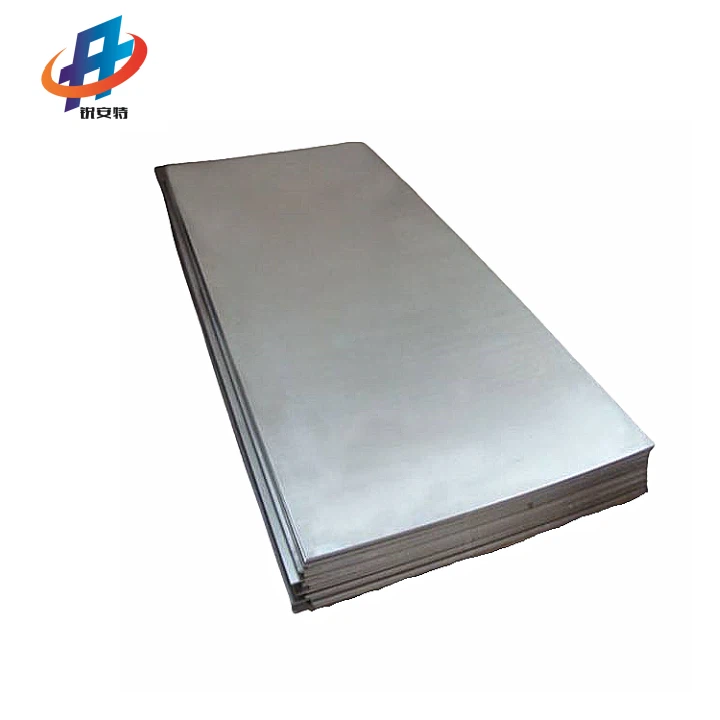

In conclusion, the hardness of BT20 Titanium Plate is a key factor that makes it a valuable material in many industries. Its combination of strength, hardness, and corrosion resistance makes it suitable for a wide range of applications. If you're looking for a reliable supplier of BT20 Titanium Plate, we're the ones to trust.
References:
- ASM Handbook Volume 2: Properties and Selection: Nonferrous Alloys and Special-Purpose Materials
- Titanium Alloys: Fundamentals and Applications by David Eylon
Send Inquiry