

What is the formability limit of BT9 Titanium Plate during cold forming?
Aug 27, 2025
Leave a message
Hey there! As a supplier of BT9 Titanium Plate, I often get asked about its formability limit during cold forming. It's a super important topic, especially for those in industries that rely on shaping titanium materials. So, let's dive right in and explore what the formability limit of BT9 Titanium Plate really is.
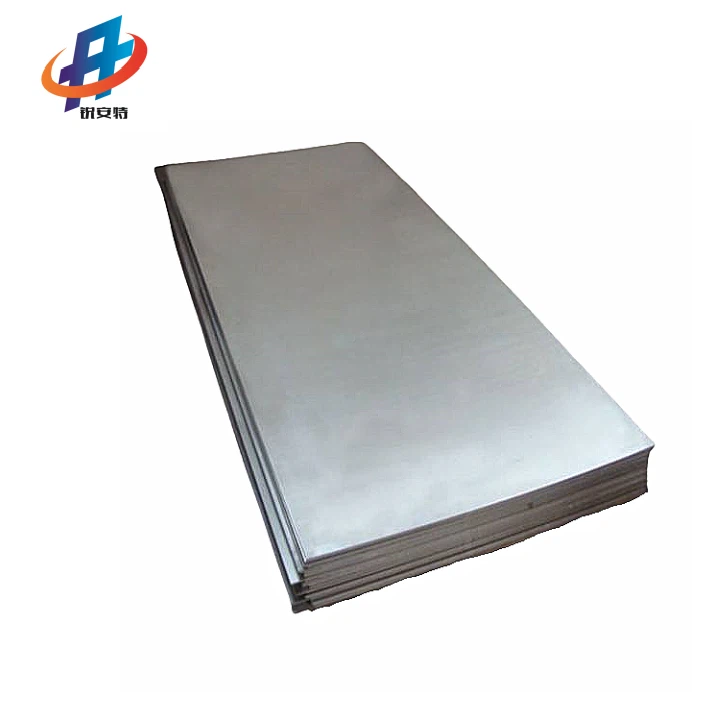
First off, what's BT9 Titanium Plate? Well, it's a high - performance titanium alloy plate known for its excellent strength, corrosion resistance, and heat resistance. You can learn more about it here: BT9 Titanium Plate. This alloy is used in a wide range of applications, from aerospace to marine engineering, and even in some high - end sports equipment.
Cold forming is a process where you shape a metal at room temperature. It's a popular method because it can save energy and time compared to hot forming. But when it comes to titanium, and specifically BT9 Titanium Plate, cold forming has its challenges.
One of the main factors that affect the formability limit of BT9 Titanium Plate during cold forming is its microstructure. BT9 Titanium has a complex microstructure that consists of different phases. These phases have different mechanical properties, which can make the material behave differently during deformation. For example, some phases might be more ductile, while others are more brittle. If you try to deform the plate too much during cold forming, the brittle phases can crack, leading to failure.
Another factor is the thickness of the plate. Thicker BT9 Titanium Plates generally have a lower formability limit during cold forming. That's because the stress required to deform a thicker plate is higher, and the material is more likely to reach its yield strength and start to crack. On the other hand, thinner plates can usually be formed more easily, but they also have their own limitations. For instance, they might be more prone to wrinkling during the cold - forming process.
The surface condition of the BT9 Titanium Plate also plays a role. A smooth surface can reduce friction during cold forming, which makes it easier to shape the plate. However, if the surface has defects such as scratches or pits, these can act as stress concentration points. When the plate is deformed, the stress at these points can be much higher than the average stress, increasing the risk of cracking.
Now, let's talk about some of the techniques that can be used to improve the formability of BT9 Titanium Plate during cold forming. One common method is to use lubricants. Lubricants can reduce the friction between the plate and the forming tools, which helps to distribute the stress more evenly across the plate. This can prevent the material from reaching its formability limit too quickly.
Another technique is to use pre - stressing. By applying a small amount of stress to the plate before the main cold - forming operation, you can change the microstructure of the material slightly. This can make the plate more ductile and improve its formability. However, pre - stressing needs to be carefully controlled, as too much pre - stress can also lead to cracking.

It's also important to compare BT9 Titanium Plate with other titanium alloys in terms of cold - forming formability. For example, Gr 12 Titanium Sheet and Gr 5 Titanium Sheet are two other popular titanium alloys. Gr 12 Titanium Sheet is known for its good weldability and moderate strength, and it generally has a better formability during cold forming compared to BT9 Titanium Plate. Gr 5 Titanium Sheet, on the other hand, is very strong but less ductile, so its formability limit during cold forming is relatively low.
In real - world applications, understanding the formability limit of BT9 Titanium Plate is crucial. For example, in the aerospace industry, parts made from BT9 Titanium Plate need to be precisely shaped to meet strict design requirements. If the formability limit is not considered, the parts might not be able to be formed correctly, leading to costly rework or even part rejection.
So, how can you determine the formability limit of BT9 Titanium Plate for your specific application? Well, one way is to conduct some trials. You can start with small samples of the plate and try different cold - forming operations on them. By measuring the amount of deformation and observing any cracks or other defects, you can get an idea of the formability limit. You can also use computer - aided engineering (CAE) simulations. These simulations can predict how the plate will behave during cold forming based on its material properties and the forming conditions.
As a supplier of BT9 Titanium Plate, I'm always here to help you with any questions you might have about its formability during cold forming. Whether you're a small - scale manufacturer or a large - scale industrial company, we can work together to find the best solutions for your needs. If you're interested in purchasing BT9 Titanium Plate or want to discuss more about its formability, feel free to reach out. We can have a detailed discussion about your project requirements and provide you with the most suitable products.
In conclusion, the formability limit of BT9 Titanium Plate during cold forming is affected by many factors, including its microstructure, thickness, and surface condition. By using appropriate techniques such as lubrication and pre - stressing, and by comparing it with other titanium alloys, you can better understand and work within its formability limits. If you have any further questions or are looking to source high - quality BT9 Titanium Plate, don't hesitate to get in touch. We're eager to assist you in your next project.
References
- Smith, J. (2018). Titanium Alloys: Properties and Applications. Metal Science Press.
- Johnson, R. (2020). Cold Forming of Metals: Principles and Practices. Engineering Technology Publications.
- Brown, A. (2019). Microstructure and Formability of Titanium Alloys. Material Research Journal.
Send Inquiry