

What is the electrical resistivity of BT9 Titanium Plate?
Nov 27, 2025
Leave a message
As a supplier of BT9 Titanium Plate, I often receive inquiries about its various properties, and one question that comes up quite frequently is: "What is the electrical resistivity of BT9 Titanium Plate?" In this blog post, I'll delve into this topic, providing a comprehensive understanding of the electrical resistivity of BT9 Titanium Plate, its relevance in different applications, and how it compares to other titanium products like the Gr 5 Titanium Sheet.
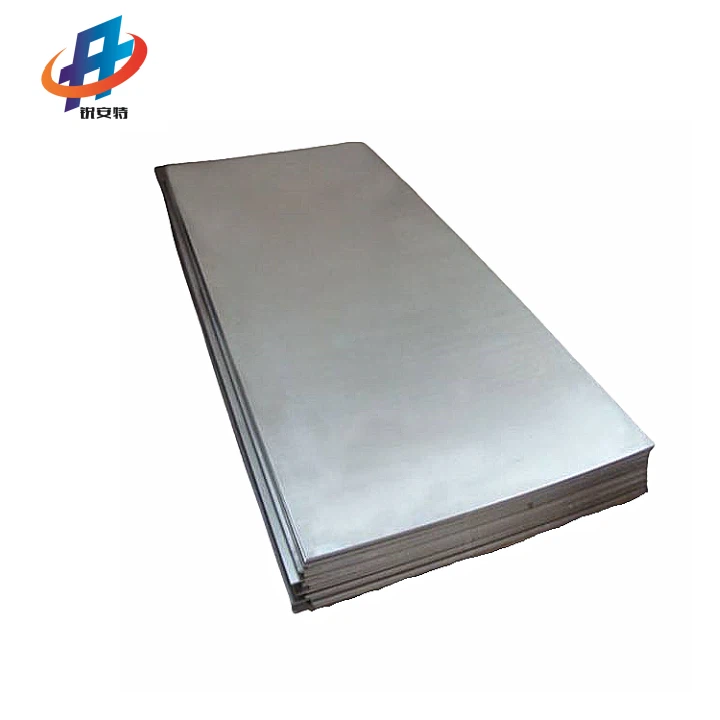

Understanding Electrical Resistivity
Before we discuss the electrical resistivity of BT9 Titanium Plate, it's essential to understand what electrical resistivity is. Electrical resistivity, denoted by the Greek letter rho (ρ), is a fundamental property of a material that quantifies how strongly it resists the flow of electric current. It is measured in ohm - meters (Ω·m). A high resistivity means that the material is a poor conductor of electricity, while a low resistivity indicates good conductivity.
Electrical Resistivity of BT9 Titanium Plate
BT9 Titanium Plate is a titanium - aluminum - tin - zirconium - molybdenum - silicon alloy with excellent high - temperature strength, creep resistance, and corrosion resistance. The electrical resistivity of BT9 Titanium Plate typically falls within a certain range. At room temperature (around 20°C or 293K), the electrical resistivity of BT9 Titanium Plate is approximately in the order of 10⁻⁷ Ω·m.
This value is relatively high compared to some common metals like copper or aluminum, which have electrical resistivities in the order of 10⁻⁸ Ω·m. The high resistivity of BT9 Titanium Plate is due to its atomic structure and the presence of alloying elements. The alloying elements in BT9 Titanium Plate disrupt the regular lattice structure of pure titanium, scattering the free electrons that are responsible for conducting electricity. This scattering effect increases the resistance to the flow of electric current, resulting in a higher electrical resistivity.
Factors Affecting the Electrical Resistivity of BT9 Titanium Plate
- Temperature: Like most metals, the electrical resistivity of BT9 Titanium Plate is temperature - dependent. As the temperature increases, the resistivity also increases. This is because at higher temperatures, the atoms in the material vibrate more vigorously. These increased atomic vibrations cause more scattering of the free electrons, making it more difficult for the electrons to flow through the material. For BT9 Titanium Plate, which is often used in high - temperature applications, the change in resistivity with temperature needs to be carefully considered.
- Alloy Composition: The exact composition of the BT9 Titanium Plate can also affect its electrical resistivity. Minor variations in the amounts of aluminum, tin, zirconium, molybdenum, and silicon can lead to differences in the resistivity. For example, an increase in the amount of certain alloying elements may further disrupt the lattice structure, increasing the resistivity.
- Microstructure: The microstructure of the BT9 Titanium Plate, such as grain size and phase distribution, can influence its electrical resistivity. A finer grain size may increase the number of grain boundaries. Since grain boundaries can scatter electrons, a material with a finer grain size may have a slightly higher electrical resistivity compared to one with a coarser grain size.
Comparison with Gr 5 Titanium Sheet
Gr 5 Titanium Sheet, also known as Ti - 6Al - 4V, is another widely used titanium alloy. Gr 5 Titanium Sheet has a similar electrical resistivity to BT9 Titanium Plate at room temperature. However, due to differences in alloy composition and microstructure, there may be slight variations.
Gr 5 Titanium Sheet contains 6% aluminum and 4% vanadium as the main alloying elements, while BT9 Titanium Plate has a more complex alloy composition. These differences in alloying elements can lead to differences in the scattering of free electrons and, consequently, differences in electrical resistivity. In general, both alloys are considered to be relatively poor conductors of electricity compared to highly conductive metals.
Applications Related to Electrical Resistivity
- Electrical Insulation Components: Due to its relatively high electrical resistivity, BT9 Titanium Plate can be used in applications where electrical insulation is required. For example, in some electrical equipment, BT9 Titanium Plate can be used as a spacer or an insulating layer to prevent the flow of unwanted electric current.
- Heating Elements: In some high - temperature heating applications, the high electrical resistivity of BT9 Titanium Plate can be an advantage. When an electric current passes through a material with high resistivity, electrical energy is converted into heat energy according to the Joule's law (P = I²R, where P is the power dissipated as heat, I is the current, and R is the resistance). BT9 Titanium Plate's ability to withstand high temperatures makes it suitable for use as a heating element in certain industrial processes.
Why Choose Our BT9 Titanium Plate
As a supplier of BT9 Titanium Plate, we ensure that our products meet the highest quality standards. Our BT9 Titanium Plates are manufactured using advanced production techniques, resulting in a consistent alloy composition and microstructure. This consistency ensures that the electrical resistivity of our products is within the expected range, providing reliable performance in various applications.
We also offer customized solutions to meet the specific needs of our customers. Whether you need a specific size, thickness, or surface finish of BT9 Titanium Plate, we can provide it. Our team of experts is always available to provide technical support and advice on the selection and application of BT9 Titanium Plate.
Contact Us for Purchase and Negotiation
If you are interested in purchasing BT9 Titanium Plate or have any questions about its electrical resistivity or other properties, we encourage you to contact us. We are committed to providing high - quality products and excellent customer service. Our experienced sales team will be happy to assist you in your procurement process and negotiate the best terms for your order.
References
- "Titanium and Titanium Alloys: Fundamentals and Applications" by J. C. Williams.
- "Handbook of Titanium Alloys" edited by Y. W. Kim, R. R. Boyer, and B. L. Mordike.
- Technical data sheets provided by titanium alloy manufacturers.
Send Inquiry