

What is the creep resistance of a titanium round bar?
Oct 30, 2025
Leave a message
Creep resistance is a critical property when considering the performance of materials, especially in applications where components are subjected to constant stress at elevated temperatures over extended periods. As a trusted supplier of titanium round bars, I am often asked about the creep resistance of these products. In this blog post, I will delve into what creep resistance is, how it applies to titanium round bars, and why it matters in various industries.
Understanding Creep Resistance
Creep is the slow and progressive deformation of a material under a constant load or stress at a high temperature. This deformation occurs over time and can lead to significant changes in the shape and dimensions of the material, ultimately affecting its functionality and safety. Creep resistance, therefore, refers to a material's ability to withstand this type of deformation and maintain its structural integrity under such conditions.
The creep process typically involves three stages: primary creep, secondary creep, and tertiary creep. In the primary creep stage, the deformation rate is relatively high but decreases over time as the material's internal structure adjusts to the applied stress. The secondary creep stage is characterized by a constant deformation rate, which is often the most important stage for engineering applications. Finally, the tertiary creep stage sees an accelerating deformation rate, leading to eventual failure of the material.
Creep Resistance of Titanium Round Bars
Titanium is known for its excellent combination of high strength, low density, and corrosion resistance. When it comes to creep resistance, titanium round bars also exhibit remarkable performance, especially at elevated temperatures. The creep behavior of titanium is influenced by several factors, including its alloy composition, grain size, and the temperature and stress levels to which it is exposed.
Alloy composition plays a crucial role in determining the creep resistance of titanium round bars. Different titanium alloys have different microstructures and properties, which can significantly affect their ability to resist creep. For example, some titanium alloys contain alloying elements such as aluminum, vanadium, and molybdenum, which can enhance their strength and creep resistance. These alloying elements can form stable precipitates within the titanium matrix, which impede the movement of dislocations and thereby reduce the rate of creep deformation.
Grain size also has a significant impact on the creep resistance of titanium round bars. Generally, finer grain sizes tend to improve creep resistance, as they provide more grain boundaries that can act as barriers to dislocation movement. However, the relationship between grain size and creep resistance is complex and can also be influenced by other factors such as the alloy composition and the temperature and stress conditions.
Applications of Titanium Round Bars with High Creep Resistance
The excellent creep resistance of titanium round bars makes them suitable for a wide range of applications in industries where components are exposed to high temperatures and constant stress. Some of these applications include:
Aerospace Industry
In the aerospace industry, titanium round bars are used in the manufacture of critical components such as turbine blades, engine casings, and structural parts. These components are subjected to high temperatures and stresses during flight, and their ability to resist creep is essential for ensuring the safety and reliability of aircraft. The high strength-to-weight ratio and excellent creep resistance of titanium make it an ideal material for these applications.
Chemical Processing Industry
In the chemical processing industry, titanium round bars are used in equipment such as heat exchangers, reactors, and pipes. These components are often exposed to corrosive chemicals and high temperatures, and the creep resistance of titanium helps to prevent deformation and failure over time. The corrosion resistance of titanium also ensures that the equipment can operate effectively in harsh chemical environments.
Power Generation Industry
In the power generation industry, titanium round bars are used in steam turbines, gas turbines, and nuclear reactors. These components are subjected to high temperatures and pressures, and their ability to resist creep is crucial for maintaining the efficiency and reliability of power plants. The high strength and creep resistance of titanium make it a suitable material for these demanding applications.
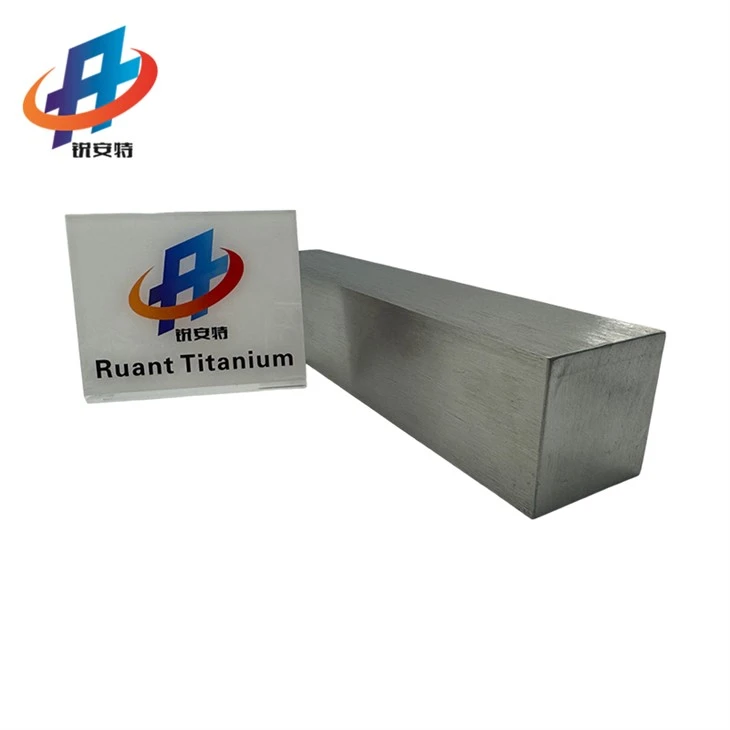

Our Titanium Round Bar Products
As a leading supplier of titanium round bars, we offer a wide range of products with different alloy compositions and specifications to meet the diverse needs of our customers. Our Gr 2 Titanium Flat Bar is a popular choice for applications that require good corrosion resistance and moderate strength. It also exhibits decent creep resistance at elevated temperatures, making it suitable for a variety of industrial applications.
Our Gr 3 Titanium Round Bar offers higher strength and better creep resistance compared to Gr 2. It is often used in applications where components are subjected to higher stresses and temperatures, such as in the aerospace and power generation industries.
In addition, our Gr 3 Titanium Square Bar provides a different shape option for customers who require square cross-sections. It shares similar properties with the Gr 3 round bar, including high strength and excellent creep resistance.
Importance of Choosing the Right Titanium Round Bar for Creep Resistance
When selecting a titanium round bar for an application that requires high creep resistance, it is important to consider several factors. Firstly, the alloy composition should be carefully chosen based on the specific temperature and stress conditions of the application. Different alloys have different creep resistance characteristics, and selecting the right alloy can ensure optimal performance.
Secondly, the heat treatment and processing history of the titanium round bar can also affect its creep resistance. Proper heat treatment can improve the microstructure and properties of the material, enhancing its ability to resist creep. It is important to work with a supplier who has expertise in heat treatment and can provide products with consistent and reliable properties.
Contact Us for Your Titanium Round Bar Needs
If you are looking for high-quality titanium round bars with excellent creep resistance, we are here to help. Our team of experts can provide you with detailed information about our products and assist you in selecting the right titanium round bar for your specific application. We are committed to providing our customers with the best products and services, and we look forward to working with you to meet your titanium round bar requirements.
References
- Callister, W. D., & Rethwisch, D. G. (2012). Materials Science and Engineering: An Introduction. Wiley.
- Lütjering, G., & Williams, J. C. (2007). Titanium: A Technical Guide. ASM International.
- ASM Handbook Committee. (1994). ASM Handbook Volume 2: Properties and Selection: Nonferrous Alloys and Special-Purpose Materials. ASM International.
Send Inquiry