

What is the brittleness of titanium sheets and plates at low temperatures?
Aug 01, 2025
Leave a message
Hey there, folks! As a supplier of titanium sheets and plates, I often get asked about the brittleness of these materials at low temperatures. It's a crucial topic, especially for industries where titanium products are used in cold environments. So, let's dive right in and explore what's going on with titanium's behavior when things get chilly.
First off, let's understand a bit about titanium. Titanium is an amazing metal. It's lightweight, strong, and highly resistant to corrosion. That's why it's used in so many applications, from aerospace to medical devices. But like any material, it has its quirks, and one of them is how it behaves at low temperatures.
Titanium exists in different grades, each with its own set of properties. When we talk about the brittleness of titanium sheets and plates at low temperatures, we need to consider these grades. For example, Gr 2 Titanium Flat Bar and Gr 1 Titanium Square Bar are commonly used in various industries. These grades have different compositions, which can affect their low - temperature performance.
In general, titanium has a relatively good toughness at room temperature. But as the temperature drops, things can start to change. The brittleness of a material is related to its ability to absorb energy before fracturing. At low temperatures, the atoms in the titanium lattice move less freely. This reduced atomic mobility means that the material is less able to deform plastically when a force is applied. Instead, it's more likely to fracture in a brittle manner.
One of the factors that influence the low - temperature brittleness of titanium sheets and plates is the grain size. A finer grain size usually leads to better toughness at low temperatures. This is because smaller grains provide more barriers to the propagation of cracks. When a crack tries to move through the material, it has to change direction more often in a fine - grained structure, which dissipates energy and makes it harder for the crack to grow.

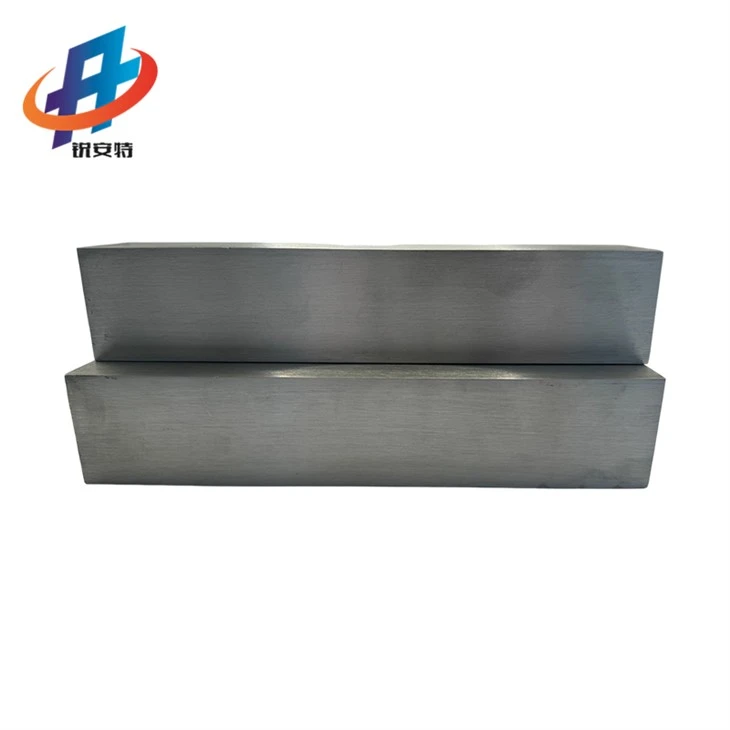
Another important factor is the presence of impurities. Even small amounts of impurities can have a significant impact on the low - temperature behavior of titanium. For example, oxygen can form hard and brittle compounds in the titanium matrix. These compounds can act as stress concentrators, making the material more prone to cracking at low temperatures. That's why high - quality titanium sheets and plates, like our Gr 4 Titanium Sheet, are carefully processed to minimize the presence of impurities.
The manufacturing process also plays a role. For instance, hot rolling and cold rolling can affect the microstructure of the titanium sheets and plates. Cold rolling can introduce residual stresses in the material, which can increase the risk of brittle fracture at low temperatures. On the other hand, proper heat treatment can relieve these residual stresses and improve the low - temperature toughness.
Now, let's talk about some real - world applications. In the aerospace industry, titanium components are often exposed to extremely low temperatures during high - altitude flights. If the titanium parts are too brittle at these low temperatures, it could pose a serious safety risk. That's why aerospace engineers need to carefully select the right grade of titanium and ensure that it meets the required low - temperature performance standards.
In the cryogenic industry, where temperatures can drop to well below freezing, titanium is also used. For example, in the storage and transportation of liquefied gases. The brittleness of titanium at low temperatures needs to be carefully considered to prevent any failures in these critical applications.
So, how can we test the low - temperature brittleness of titanium sheets and plates? One common method is the Charpy impact test. In this test, a notched specimen of the titanium material is struck with a pendulum. The energy absorbed during the impact is measured. A higher energy absorption indicates better toughness and less brittleness at the tested temperature.
Another test is the fracture toughness test. This test measures the material's resistance to crack growth under a specific loading condition. By conducting these tests at different low temperatures, we can get a better understanding of how the titanium will perform in real - world cold environments.
As a supplier, we take these factors very seriously. We work closely with our customers to understand their specific requirements, especially when it comes to low - temperature applications. We make sure that the titanium sheets and plates we supply are of the highest quality and meet the necessary low - temperature performance criteria.
If you're in the market for titanium sheets or plates, whether it's for an application that requires good low - temperature toughness or not, we're here to help. We have a wide range of grades and sizes available, and we can provide you with all the technical information you need. Just reach out to us, and we'll start a conversation about how we can meet your specific needs. We're always eager to work with customers to find the best titanium solutions for their projects.
In conclusion, the brittleness of titanium sheets and plates at low temperatures is a complex but important topic. It's influenced by factors such as grade, grain size, impurities, and manufacturing processes. By understanding these factors and conducting proper testing, we can ensure that titanium is used safely and effectively in cold environments. If you have any questions or are interested in purchasing titanium products, don't hesitate to get in touch. We're here to assist you every step of the way.
References
- Callister, W. D., & Rethwisch, D. G. (2011). Materials Science and Engineering: An Introduction. Wiley.
- ASM Handbook Committee. (1994). ASM Handbook, Volume 1: Properties and Selection: Irons, Steels, and High - Performance Alloys. ASM International.
Send Inquiry