

What is the brittleness of titanium alloy plate?
Dec 30, 2025
Leave a message
Hey there! As a supplier of titanium alloy plates, I've been getting a lot of questions about the brittleness of these awesome materials. So, I thought I'd sit down and have a chat with you all about what exactly this brittleness is and how it affects titanium alloy plates.
First off, let's talk about what brittleness means in general. When we say a material is brittle, we're basically saying that it doesn't bend or stretch much before it breaks. You know, like glass. If you try to bend a glass rod, it'll just snap right away. That's brittleness in action.
Now, titanium alloy plates are known for being super strong and lightweight, which makes them a popular choice in a whole bunch of industries, from aerospace to medical. But they can also be a bit brittle in certain situations.
One of the main factors that can affect the brittleness of titanium alloy plates is the alloy composition. Different alloys have different properties, and some are more prone to brittleness than others. For example, Gr 23 Titanium Sheet is a popular alloy that's often used in medical applications because of its high strength and good corrosion resistance. However, it can be more brittle than some other alloys, especially if it's not heat-treated properly.
Another factor that can affect brittleness is the manufacturing process. If the titanium alloy plate is not made correctly, it can have defects or impurities that can make it more brittle. For example, if there are cracks or voids in the plate, it can weaken the material and make it more likely to break under stress.
The heat treatment of titanium alloy plates also plays a crucial role. Heat treatment can change the microstructure of the alloy, which in turn affects its mechanical properties. If the heat treatment is not done right, the plate can become too hard and brittle. On the other hand, if it's over - annealed, it might lose some of its strength.

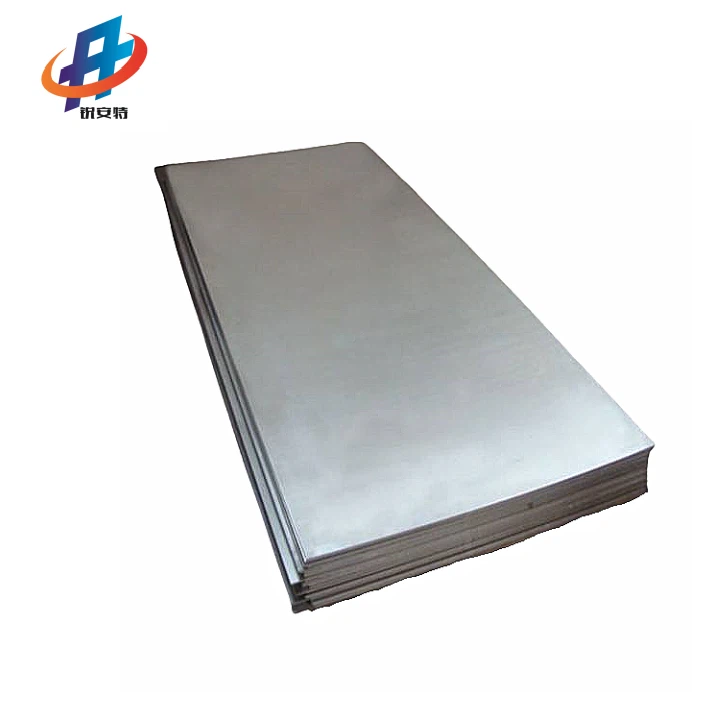
The environment in which the titanium alloy plate is used can also have an impact on its brittleness. For instance, if the plate is exposed to high temperatures for a long time, it can undergo a process called creep, which can make it more brittle over time. Also, exposure to certain chemicals or corrosive substances can cause the surface of the plate to degrade, leading to an increase in brittleness.
So, how can we tell if a titanium alloy plate is brittle? Well, one way is to do a simple bend test. If the plate cracks or breaks easily when bent, it's a sign that it might be brittle. Another way is to use non - destructive testing methods, like ultrasonic testing or X - ray inspection, to look for internal defects that could lead to brittleness.
As a supplier, we take a lot of steps to make sure that our titanium alloy plates are of the highest quality and have the right balance of strength and ductility (which is the opposite of brittleness). We carefully control the alloy composition during the manufacturing process to ensure that it meets the required specifications. We also use advanced heat treatment techniques to optimize the mechanical properties of the plates.
And we don't just stop at the manufacturing stage. We also perform thorough quality control checks on every plate before it leaves our facility. This includes both destructive and non - destructive testing to make sure that the plate is free from defects and has the right level of brittleness.
If you're in the market for titanium alloy plates, it's really important to understand the brittleness factor. You want to make sure that the plates you choose are suitable for your specific application. For example, if you're using the plates in a high - stress environment, you'll need a plate that has good ductility and is less likely to break. On the other hand, if you're using the plates in a less demanding application, you might be able to get away with a plate that's a bit more brittle.
We offer a wide range of titanium alloy plates, including Gr 7 Titanium Sheet and Gr 5 Titanium Sheet. Each of these alloys has its own unique properties, and we can help you choose the one that's right for you.
If you have any questions about the brittleness of our titanium alloy plates or need help choosing the right alloy for your project, don't hesitate to reach out. We're here to assist you every step of the way. Whether you're a small business looking for a few plates or a large corporation in need of a bulk order, we've got you covered.
In conclusion, understanding the brittleness of titanium alloy plates is crucial for making the right choice when it comes to your projects. By considering factors like alloy composition, manufacturing process, heat treatment, and the environment of use, you can ensure that you get the best - performing plates for your needs. And as your trusted supplier, we're committed to providing you with high - quality titanium alloy plates that meet your exact specifications. So, if you're interested in purchasing titanium alloy plates, get in touch with us for a detailed discussion and let's work together to find the perfect solution for you.
References
- "Titanium and Titanium Alloys: Fundamentals and Applications" by John C. Williams
- "Materials Science and Engineering: An Introduction" by William D. Callister Jr. and David G. Rethwisch
Send Inquiry