

What are the straightening methods for Gr 23 Titanium Sheet?
Jul 25, 2025
Leave a message
As a supplier of Gr 23 Titanium Sheet, I've witnessed firsthand the importance of proper straightening methods for this high - performance material. Gr 23 Titanium Sheet, which you can learn more about Gr 23 Titanium Sheet, is widely used in various industries due to its excellent corrosion resistance, high strength - to - weight ratio, and biocompatibility. However, during the manufacturing, transportation, or handling processes, the sheet may become deformed. In this blog, I'll share some of the most effective straightening methods for Gr 23 Titanium Sheet.
Mechanical Straightening
Mechanical straightening is one of the most common methods used for straightening Gr 23 Titanium Sheet. This method involves applying external forces to the deformed sheet to reshape it.
Roller Straightening
Roller straightening is a highly efficient mechanical straightening technique. In this process, the Gr 23 Titanium Sheet passes through a series of rollers. The rollers are arranged in such a way that they apply a combination of bending and flattening forces to the sheet. By carefully adjusting the gap between the rollers and the pressure applied, we can gradually correct the curvature and flatness of the sheet.
The advantage of roller straightening is its high productivity. It can handle large - scale production and is suitable for sheets with relatively uniform deformation. However, it requires precise control of the roller parameters. If the parameters are not set correctly, it may cause over - bending or uneven straightening, which can affect the mechanical properties of the Gr 23 Titanium Sheet.
Press Straightening
Press straightening is another mechanical method. A press machine is used to apply a large force to the deformed area of the sheet. The sheet is placed between two flat plates or dies, and the press exerts a downward force to flatten the sheet. This method is particularly useful for correcting local deformations, such as dents or small - scale bends.
One of the key considerations in press straightening is the selection of the appropriate press force. If the force is too small, the deformation may not be fully corrected. On the other hand, if the force is too large, it can lead to cracking or damage to the Gr 23 Titanium Sheet. Additionally, the surface finish of the plates or dies used in the press should be smooth to avoid scratching the sheet.
Thermal Straightening
Thermal straightening takes advantage of the thermal expansion and contraction properties of Gr 23 Titanium Sheet. By heating specific areas of the sheet, we can induce controlled thermal stress to correct the deformation.
Local Heating
Local heating is a common thermal straightening method. A heat source, such as a torch or an induction heater, is used to heat the convex side of the deformed sheet. As the heated area expands, it creates a stress gradient within the sheet. When the sheet cools down, the contraction of the heated area helps to straighten the sheet.
The key to successful local heating is to control the heating temperature and heating time accurately. The heating temperature should be high enough to induce sufficient thermal stress but not so high as to cause phase changes or damage to the material. Different thicknesses of Gr 23 Titanium Sheet may require different heating parameters. For example, thinner sheets may require a shorter heating time and a relatively lower temperature.
Furnace Heating
In some cases, furnace heating can be used for thermal straightening. The entire Gr 23 Titanium Sheet is placed in a furnace and heated to a specific temperature. The uniform heating and subsequent cooling process can help to relieve internal stresses and correct the deformation.
Furnace heating is suitable for sheets with complex or large - scale deformations. However, it is a time - consuming process and requires careful control of the heating and cooling rates. Improper heating or cooling rates can lead to residual stresses in the sheet, which may affect its long - term performance.
Chemical - Assisted Straightening
Chemical - assisted straightening is a relatively new approach. It involves using chemical solutions to modify the surface properties of the Gr 23 Titanium Sheet, which can then facilitate the straightening process.
Etching
Etching is one of the chemical - assisted methods. A chemical etchant is applied to the surface of the sheet. The etchant selectively removes a thin layer of the material from the surface. This can change the stress distribution within the sheet and make it easier to straighten.
However, etching needs to be carefully controlled. If the etching process is not properly monitored, it can cause excessive material removal, which can reduce the thickness of the sheet and affect its mechanical properties.
Considerations in Straightening Gr 23 Titanium Sheet
Regardless of the straightening method used, there are several important considerations when straightening Gr 23 Titanium Sheet.
Material Properties
Gr 23 Titanium Sheet has specific mechanical and physical properties. Its high strength and low thermal conductivity mean that we need to use appropriate forces and heating rates during the straightening process. For example, compared with some other metals, more force may be required to deform the Gr 23 Titanium Sheet during mechanical straightening, but we also need to be careful not to exceed its yield strength to avoid permanent damage.
Surface Quality
The surface quality of Gr 23 Titanium Sheet is crucial, especially in applications where corrosion resistance and biocompatibility are important. During the straightening process, we need to take measures to prevent surface scratches, pits, or other defects. For example, using soft - faced tools or protective coatings on the contact surfaces can help to maintain the surface integrity of the sheet.
Residual Stresses
After straightening, residual stresses may remain in the Gr 23 Titanium Sheet. These residual stresses can affect the dimensional stability and long - term performance of the sheet. Therefore, it is often necessary to perform stress - relief heat treatment after straightening to reduce the residual stresses.
Comparison with Other Titanium Sheets
It's interesting to compare the straightening methods of Gr 23 Titanium Sheet with those of other titanium sheets, such as BT20 Titanium Plate and Gr 5 Titanium Sheet.
BT20 Titanium Plate has different alloy compositions and mechanical properties compared to Gr 23 Titanium Sheet. It may require different straightening parameters. For example, BT20 Titanium Plate may be more sensitive to high - temperature straightening due to its specific phase transformation characteristics.
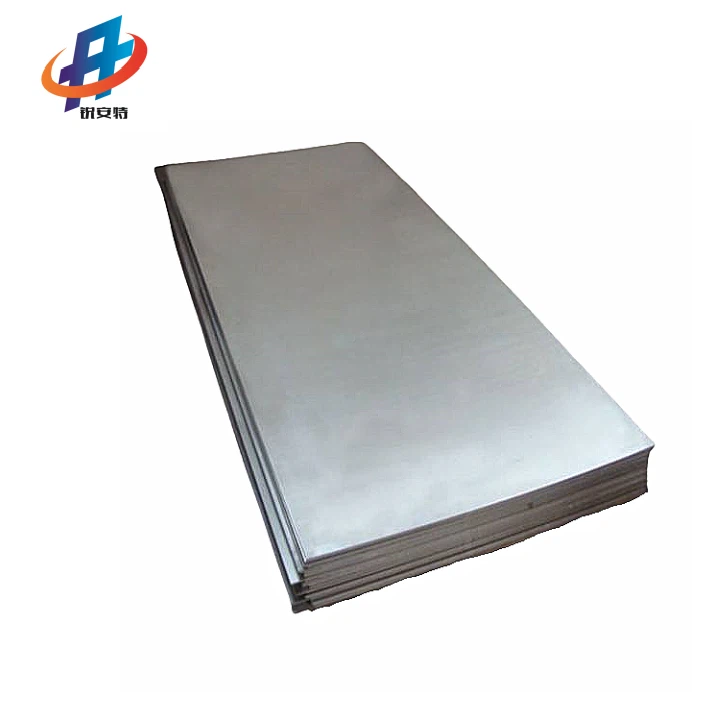

Gr 5 Titanium Sheet, also known as Ti - 6Al - 4V, is a widely used titanium alloy. Although it shares some similarities with Gr 23 Titanium Sheet in terms of straightening methods, the specific process parameters may vary. Gr 5 Titanium Sheet has a higher strength in some cases, which means that more force may be required during mechanical straightening.
Conclusion
In conclusion, there are several effective straightening methods for Gr 23 Titanium Sheet, including mechanical straightening, thermal straightening, and chemical - assisted straightening. Each method has its own advantages and limitations, and the choice of method depends on the specific deformation characteristics of the sheet, production requirements, and quality standards.
As a supplier of Gr 23 Titanium Sheet, we are committed to providing high - quality products. If you have any needs regarding Gr 23 Titanium Sheet or are interested in learning more about its straightening methods, please feel free to contact us for further discussion and potential procurement opportunities.
References
- ASM Handbook Volume 6: Welding, Brazing, and Soldering. ASM International.
- Titanium: A Technical Guide. Second Edition. J.R. Davis (Ed.). ASM International.
- Research papers on titanium alloy processing and straightening techniques from relevant academic journals.
Send Inquiry