

What are the mechanical properties of Gr 4 Titanium Sheet?
Jul 04, 2025
Leave a message
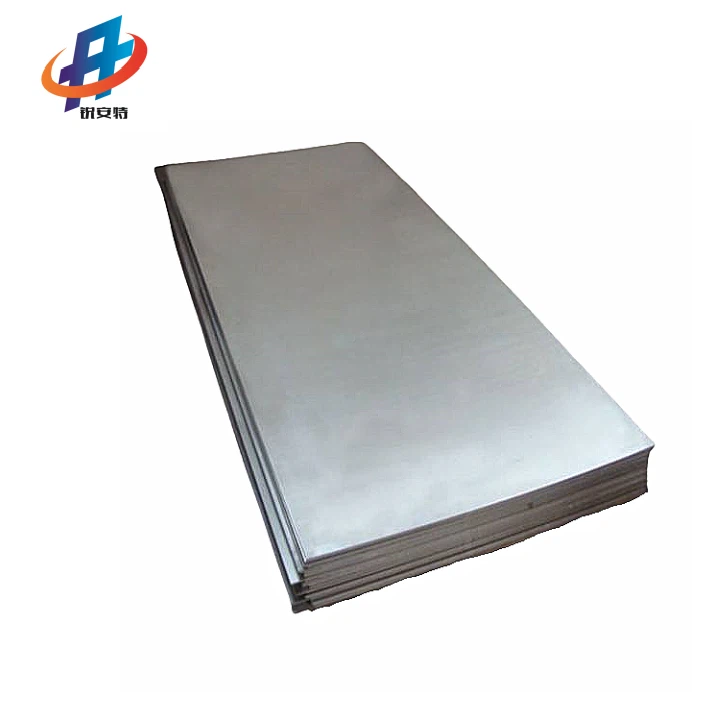
Hey there! As a supplier of Gr 4 Titanium Sheet, I'm super stoked to share some cool insights about its mechanical properties. Gr 4 titanium is often referred to as the "workhorse" of the titanium family, and for good reason. It's got a bunch of great features that make it a top choice in various industries.
Let's start with the basics. Gr 4 titanium is an unalloyed titanium with a higher oxygen content compared to other grades like Gr 1, 2, and 3. This higher oxygen content gives it some unique mechanical properties. First off, it has excellent strength. The tensile strength of Gr 4 titanium sheet is pretty impressive. It can handle a lot of stress before it starts to deform or break. In fact, the minimum tensile strength of Gr 4 titanium is around 485 MPa (megapascals). That's quite a bit of force it can withstand!
Another important property is its yield strength. The yield strength is the point at which the material starts to permanently deform. For Gr 4 titanium sheet, the minimum yield strength is about 415 MPa. This means that it can maintain its shape under a fair amount of pressure without getting permanently bent out of shape.
Ductility is also a key factor. Ductility refers to a material's ability to be stretched or drawn into a wire without breaking. Gr 4 titanium has a decent amount of ductility. It can be formed into different shapes through processes like rolling, forging, and bending. This makes it really versatile for manufacturing all sorts of products.
Now, let's talk about hardness. Hardness is a measure of a material's resistance to indentation or scratching. Gr 4 titanium sheet has a relatively high hardness compared to some other metals. This hardness gives it good wear resistance, which is crucial in applications where the material might be subjected to friction or abrasion.
One of the things that makes Gr 4 titanium so special is its corrosion resistance. It forms a thin, protective oxide layer on its surface when exposed to oxygen. This oxide layer acts as a barrier, preventing the metal from reacting with the surrounding environment. Whether it's in seawater, chemical solutions, or high - temperature environments, Gr 4 titanium can hold up really well. This makes it a popular choice for marine applications, chemical processing plants, and aerospace components.
When it comes to comparison with other titanium grades, it's interesting to look at how it stacks up against OT4 Titanium Sheet and Gr 5 Titanium Sheet. OT4 titanium sheet is also a titanium alloy, but its mechanical properties are a bit different. OT4 is known for its good weldability and formability, but Gr 4 has higher strength. On the other hand, Gr 5 titanium, also known as Ti - 6Al - 4V, is a very popular alloy. It has even higher strength than Gr 4, but Gr 4 is more cost - effective in some applications where extreme strength isn't always necessary.
BT9 Titanium Plate is another option. BT9 is a high - strength titanium alloy with good heat resistance. While it may outperform Gr 4 in high - temperature applications, Gr 4 is more suitable for general - purpose use where corrosion resistance and moderate strength are the main requirements.
The density of Gr 4 titanium sheet is about 4.51 g/cm³. This relatively low density makes it a lightweight material, which is a big advantage in industries like aerospace and automotive. Lighter materials mean better fuel efficiency and lower operating costs.
In terms of thermal properties, Gr 4 titanium has a relatively low thermal conductivity. This can be both an advantage and a disadvantage depending on the application. In some cases, low thermal conductivity is desirable as it can act as an insulator. However, in applications where heat transfer is important, it might require additional measures to manage the heat.
The fatigue resistance of Gr 4 titanium sheet is also worth mentioning. Fatigue is the weakening of a material caused by repeated loading and unloading. Gr 4 titanium has good fatigue resistance, which means it can withstand a large number of stress cycles without failing. This is crucial in applications like aircraft components and mechanical parts that are subjected to cyclic loading.
Now, if you're in the market for Gr 4 titanium sheet, you'll be glad to know that it can be customized to your specific needs. We can provide different thicknesses, widths, and lengths to suit your project requirements. Whether you're building a small prototype or a large - scale industrial structure, we've got you covered.
If you're interested in learning more about our Gr 4 titanium sheet or want to place an order, don't hesitate to reach out. We're here to help you find the best solution for your needs. Just drop us a message, and we'll start the conversation about how we can work together.

References
- ASM Handbook Volume 2: Properties and Selection: Nonferrous Alloys and Special - Purpose Materials
- Titanium: A Technical Guide, Second Edition
Send Inquiry