

What are the factors affecting the quality of OT4 titanium sheet?
Oct 07, 2025
Leave a message
As a supplier of OT4 titanium sheets, I've witnessed firsthand the complexities and nuances that go into producing high - quality products. OT4 titanium sheets are widely used in various industries due to their excellent corrosion resistance, high strength - to - weight ratio, and good weldability. However, several factors can significantly affect the quality of these sheets. In this blog, I'll delve into the key factors that play a crucial role in determining the quality of OT4 titanium sheets.
Raw Material Quality
The quality of the raw materials used in the production of OT4 titanium sheets is the foundation for the final product's quality. Titanium sponge, the primary raw material, should meet strict chemical composition requirements. Impurities such as iron (Fe), carbon (C), nitrogen (N), and oxygen (O) can have a profound impact on the mechanical properties of the titanium sheets.
For instance, an excessive amount of iron can increase the strength of the titanium but also reduce its ductility. High carbon content may lead to the formation of titanium carbide, which can embrittle the material. Nitrogen and oxygen are interstitial elements that can strengthen the titanium matrix, but if their concentrations are too high, they can cause a decrease in toughness and weldability.
As a supplier, we source our titanium sponge from trusted suppliers who adhere to international standards. We conduct thorough chemical analysis of the raw materials to ensure that they meet the required specifications for OT4 titanium. This initial step is essential in producing high - quality sheets that can meet the demanding requirements of our customers.
Melting and Casting Process
The melting and casting process is another critical factor that affects the quality of OT4 titanium sheets. Vacuum arc remelting (VAR) is the most common method used to produce titanium ingots. This process involves melting the titanium sponge under a vacuum to remove impurities and ensure a homogeneous chemical composition.
During the VAR process, the melting rate, arc stability, and electrode quality are crucial parameters. A high melting rate can lead to insufficient time for the removal of impurities, while unstable arcs can cause inhomogeneities in the ingot. The quality of the electrode, which is made from the titanium sponge, also affects the final ingot quality. Any defects or inclusions in the electrode can be transferred to the ingot.
After melting, the titanium ingot is cast into a suitable shape, usually a slab or billet. The casting process should be carefully controlled to avoid defects such as porosity, shrinkage cavities, and segregation. Proper gating and risering systems are designed to ensure smooth metal flow and uniform solidification.
Rolling Process
The rolling process is used to convert the titanium ingot into sheets. Hot rolling is typically the first step, where the ingot is heated to a high temperature and passed through a series of rolling mills. The hot - rolling temperature, reduction ratio, and rolling speed are important factors that affect the microstructure and mechanical properties of the sheets.
If the hot - rolling temperature is too high, the grains in the titanium can grow excessively, leading to a decrease in strength and toughness. On the other hand, if the temperature is too low, the material may not be easily deformable, and cracks may occur during rolling. The reduction ratio, which is the ratio of the initial thickness to the final thickness, also affects the grain size and texture of the sheets. A higher reduction ratio can result in finer grains and better mechanical properties.
Cold rolling is often performed after hot rolling to achieve the desired thickness and surface finish. Cold rolling can further refine the microstructure and improve the strength of the sheets. However, it can also introduce residual stresses, which need to be relieved through annealing.
Heat Treatment
Heat treatment is an important step in the production of OT4 titanium sheets. Annealing is the most common heat - treatment process, which is used to relieve residual stresses, improve ductility, and refine the microstructure. The annealing temperature and time are critical parameters that need to be carefully controlled.
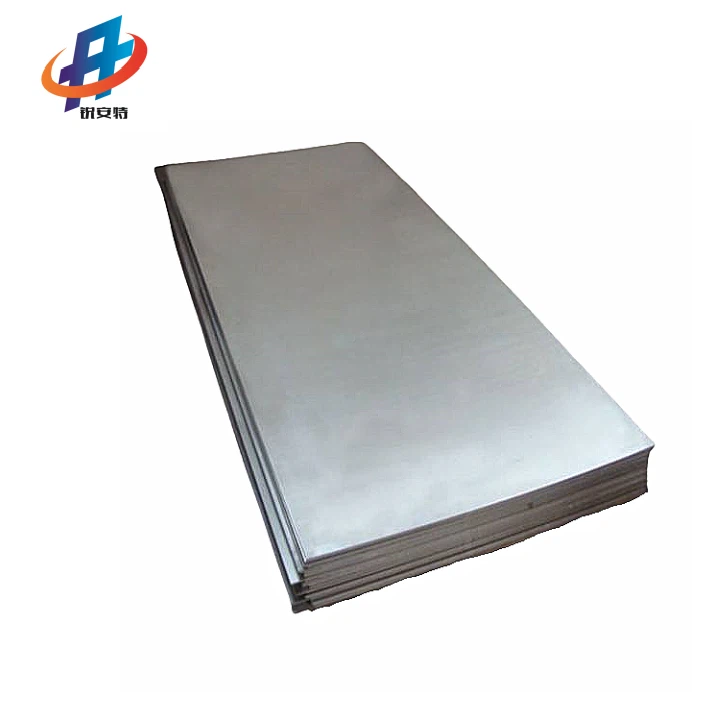

If the annealing temperature is too low or the time is too short, the residual stresses may not be fully relieved, and the material may still have poor ductility. Conversely, if the temperature is too high or the time is too long, the grains may grow, leading to a decrease in strength.
Solution treatment and aging are other heat - treatment processes that can be used to improve the mechanical properties of OT4 titanium sheets. Solution treatment involves heating the material to a high temperature to dissolve the alloying elements in the matrix, followed by rapid cooling. Aging is then performed at a lower temperature to precipitate the alloying elements, which can strengthen the material.
Surface Treatment
The surface quality of OT4 titanium sheets is also an important factor. A smooth and clean surface is required for many applications, such as in the aerospace and medical industries. Surface defects such as scratches, pits, and oxide layers can affect the appearance and performance of the sheets.
We use various surface - treatment methods to improve the surface quality of our OT4 titanium sheets. Grinding and polishing are common methods used to remove surface roughness and defects. Chemical cleaning and passivation are also used to remove contaminants and form a protective oxide layer on the surface.
Quality Control and Testing
Throughout the production process, strict quality control and testing are essential to ensure the quality of OT4 titanium sheets. We conduct a series of tests, including chemical analysis, mechanical testing, non - destructive testing, and microstructure examination.
Chemical analysis is used to verify the chemical composition of the sheets, ensuring that it meets the required specifications. Mechanical testing, such as tensile testing, hardness testing, and impact testing, is used to evaluate the mechanical properties of the sheets. Non - destructive testing methods, such as ultrasonic testing, radiographic testing, and eddy - current testing, are used to detect internal defects such as cracks and inclusions. Microstructure examination is used to analyze the grain size, phase composition, and texture of the sheets.
By adhering to strict quality control procedures and conducting comprehensive testing, we can ensure that our OT4 titanium sheets meet the highest quality standards.
Comparison with Other Titanium Sheets
It's also worth comparing OT4 titanium sheets with other popular titanium sheets, such as Gr 5 Titanium Sheet and Gr 12 Titanium Sheet. Gr 5 titanium sheets, also known as Ti - 6Al - 4V, are one of the most widely used titanium alloys. They have higher strength and better heat resistance compared to OT4 titanium sheets, but they are also more expensive. Gr 12 titanium sheets, which contain molybdenum and nickel, have good corrosion resistance in various environments, especially in reducing acids.
Each type of titanium sheet has its own unique properties and applications. As a supplier, we can provide our customers with professional advice on choosing the most suitable titanium sheet for their specific needs.
In conclusion, the quality of OT4 titanium sheets is affected by multiple factors, including raw material quality, melting and casting process, rolling process, heat treatment, surface treatment, and quality control. As a supplier, we are committed to producing high - quality OT4 titanium sheets by carefully controlling each step of the production process. If you are interested in our OT4 titanium sheets or need more information about our products, please feel free to contact us for procurement and negotiation.
References
- "Titanium: A Technical Guide" by Don Eylon.
- "Metallurgy and Processing of Titanium Alloys" by Yuri Estrin and Mark R. Barnett.
- International standards for titanium materials, such as ASTM and ISO standards.
Send Inquiry