

How to increase the strength of a titanium round bar?
Aug 08, 2025
Leave a message
As a seasoned supplier of titanium round bars, I've witnessed firsthand the ever - growing demand for high - strength titanium products across various industries. Titanium round bars are widely used in aerospace, medical, and automotive sectors, where strength is a crucial factor. In this blog, I'll share some effective methods to increase the strength of a titanium round bar, drawing on my years of experience in the industry.
1. Alloying
Alloying is one of the most common and effective ways to enhance the strength of titanium round bars. By adding specific alloying elements to pure titanium, we can significantly improve its mechanical properties.

-
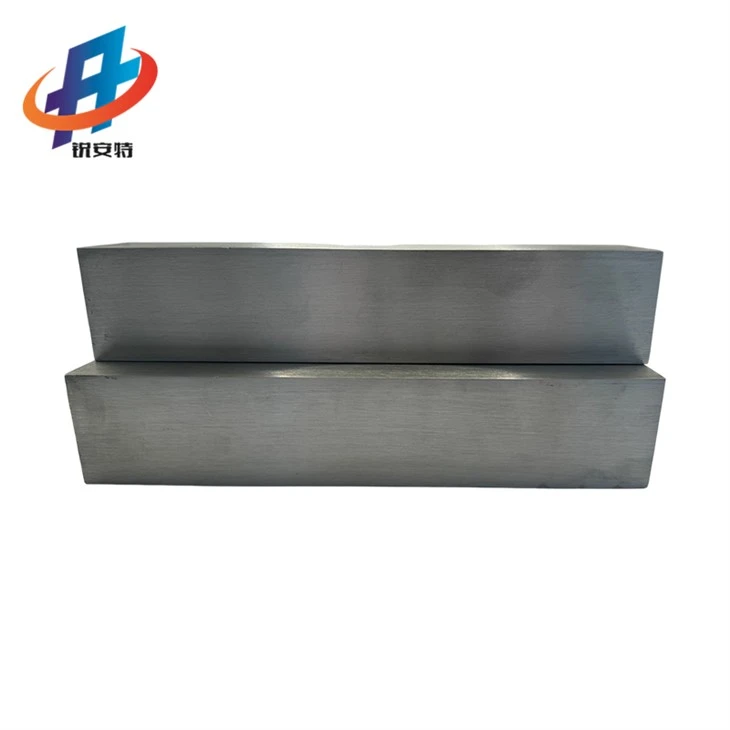
Alpha - stabilizers: Elements such as aluminum (Al) are alpha - stabilizers. Aluminum can form a solid solution with titanium, increasing its strength and creep resistance. When aluminum is added to titanium, it restricts the movement of dislocations within the crystal lattice, which is a key factor in strengthening the material. For example, in the Gr 5 Titanium Flat Bar, the addition of aluminum and vanadium makes it one of the most widely used titanium alloys due to its high strength - to - weight ratio.
-
Beta - stabilizers: Vanadium (V), molybdenum (Mo), and niobium (Nb) are beta - stabilizers. These elements can transform the titanium from the alpha phase to the beta phase at lower temperatures. The beta phase has a body - centered cubic (BCC) structure, which can provide better formability and higher strength. For instance, the addition of vanadium in Gr 5 titanium alloy helps in achieving a fine - grained microstructure, which contributes to its excellent strength and toughness.
2. Heat Treatment
Heat treatment is another powerful tool to increase the strength of titanium round bars. Different heat treatment processes can be used depending on the alloy composition and the desired properties.
-
Annealing: Annealing is a process of heating the titanium round bar to a specific temperature and then slowly cooling it. This process relieves internal stresses, refines the grain structure, and improves the ductility of the material. For some applications where a balance between strength and ductility is required, annealing can be a great option. For example, stress - relief annealing can be used to reduce the residual stresses introduced during manufacturing processes such as machining or forging.
-
Solution Treatment and Aging: Solution treatment involves heating the titanium round bar to a high temperature to dissolve the alloying elements into a single - phase solid solution. After that, the bar is rapidly quenched to room temperature to retain the supersaturated solid solution. Subsequently, aging is carried out at a lower temperature, which causes the precipitation of fine particles within the microstructure. These precipitates act as obstacles to dislocation movement, thereby increasing the strength of the material. This process is commonly used for high - strength titanium alloys like Gr 5.
3. Cold Working
Cold working is a mechanical process that can significantly increase the strength of titanium round bars. When a titanium round bar is cold - worked, such as by cold rolling or cold drawing, the grains within the material are deformed. This deformation leads to an increase in the number of dislocations and the formation of a more complex dislocation network.
-
Cold Rolling: In cold rolling, the titanium round bar is passed through a pair of rollers at room temperature. The reduction in cross - sectional area during cold rolling causes the grains to elongate in the rolling direction. This results in a strengthening effect due to the increased dislocation density. Cold - rolled titanium round bars often have higher yield strength and ultimate tensile strength compared to their as - received counterparts.
-
Cold Drawing: Cold drawing involves pulling the titanium round bar through a die to reduce its diameter. Similar to cold rolling, cold drawing also deforms the grains and increases the dislocation density. The reduction in diameter can be precisely controlled to achieve the desired strength and dimensional accuracy. However, it's important to note that excessive cold working can lead to a decrease in ductility, so a proper balance needs to be maintained.
4. Grain Refinement
Grain refinement is an effective way to improve the strength of titanium round bars. A fine - grained microstructure provides more grain boundaries, which act as barriers to dislocation movement.
-
Thermomechanical Processing: Thermomechanical processing combines heat treatment and mechanical deformation. By carefully controlling the temperature and deformation during processing, a fine - grained microstructure can be achieved. For example, a series of hot and cold working steps followed by appropriate heat treatment can break down the large grains into smaller ones. This not only increases the strength but also improves the toughness and fatigue resistance of the titanium round bar.
-
Addition of Grain - Refining Agents: Some elements can be added as grain - refining agents during the melting and casting process. For example, boron (B) can be added in small amounts to titanium to refine the grain size. Boron forms borides, which act as heterogeneous nucleation sites during solidification, leading to a finer grain structure.
5. Surface Treatment
Surface treatment can also play a role in increasing the strength of titanium round bars, especially in applications where surface - related failures such as wear and corrosion are a concern.
-
Shot Peening: Shot peening is a process where small spherical particles are shot at high velocity onto the surface of the titanium round bar. This creates a compressive stress layer on the surface. Compressive stresses can resist crack initiation and propagation, thereby improving the fatigue strength of the material. Shot - peened titanium round bars are often used in aerospace components where fatigue life is a critical factor.
-
Coating: Applying a protective coating on the surface of the titanium round bar can enhance its corrosion resistance and wear resistance. For example, a ceramic coating can provide a hard and wear - resistant surface, while a polymer coating can offer protection against chemical corrosion. This not only extends the service life of the bar but also helps in maintaining its strength over time.
6. Quality Control in Manufacturing
Ensuring high - quality manufacturing processes is essential for achieving strong titanium round bars.
-
Melting and Casting: The melting and casting process should be carefully controlled to ensure a homogeneous distribution of alloying elements and a low level of impurities. Impurities such as oxygen, nitrogen, and carbon can have a negative impact on the strength and ductility of titanium. Advanced melting techniques such as vacuum arc remelting (VAR) can be used to produce high - quality titanium ingots with a uniform composition.
-
Machining and Finishing: During machining and finishing processes, it's important to avoid introducing excessive heat or mechanical damage to the titanium round bar. Improper machining parameters can lead to surface cracks, residual stresses, and changes in the microstructure, which can all reduce the strength of the bar. Using sharp cutting tools and appropriate coolant during machining can help in maintaining the integrity of the material.
As a supplier of titanium round bars, we are committed to providing our customers with high - strength products. We use the latest technologies and strict quality control measures in our manufacturing processes. Whether you need Gr 1 Titanium Square Bar for general applications or Gr 12 Titanium Round Bar for more specialized uses, we can meet your requirements. If you are interested in our titanium round bars or have any questions about increasing the strength of titanium products, please feel free to contact us for further discussions and procurement. We look forward to working with you to find the best titanium solutions for your projects.
References
- "Titanium: A Technical Guide" by John C. Williams
- "Materials Science and Engineering: An Introduction" by William D. Callister, Jr. and David G. Rethwisch
- "Handbook of Titanium Alloys" edited by Yuri Koledintsev and Vitaly E. Panin
Send Inquiry