

How to evaluate the pitting corrosion resistance of OT4 titanium sheet?
Sep 22, 2025
Leave a message
Pitting corrosion is a localized form of corrosion that occurs on metal surfaces, leading to the formation of small pits or holes. For OT4 titanium sheet suppliers like me, evaluating the pitting corrosion resistance of our products is crucial. This not only ensures the quality and durability of the OT4 titanium sheets but also helps customers make informed decisions. In this blog, I'll share some effective methods to evaluate the pitting corrosion resistance of OT4 titanium sheet.
Understanding OT4 Titanium Sheet
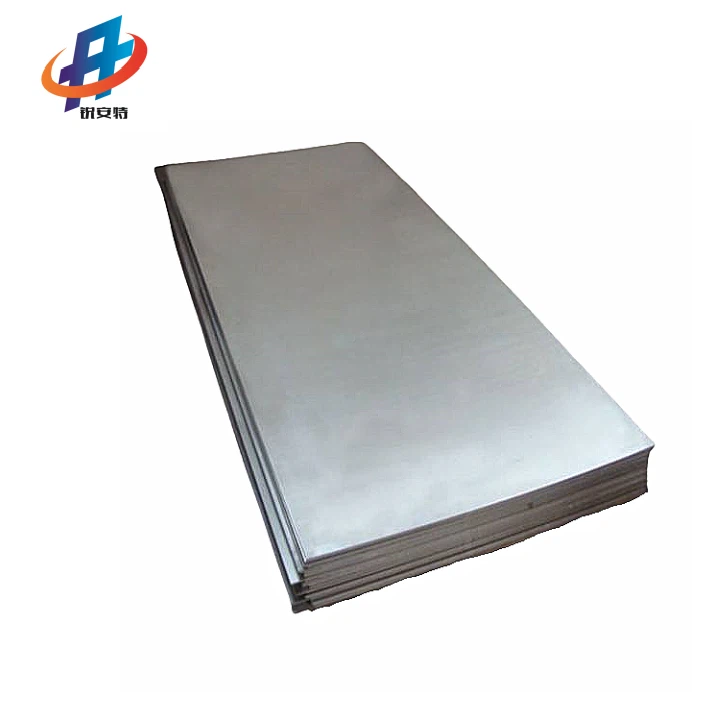
OT4 titanium is a type of titanium alloy that is widely used in various industries due to its excellent mechanical properties, high strength - to - weight ratio, and good corrosion resistance. However, in certain aggressive environments, it may still be susceptible to pitting corrosion. OT4 titanium sheet is often used in marine applications, chemical processing plants, and other areas where corrosion resistance is of great importance.
Factors Affecting Pitting Corrosion Resistance of OT4 Titanium Sheet
Before diving into the evaluation methods, it's essential to understand the factors that can influence the pitting corrosion resistance of OT4 titanium sheet.
- Chemical Composition: The alloying elements in OT4 titanium can significantly affect its corrosion resistance. For example, elements like molybdenum and chromium can enhance the pitting corrosion resistance by forming a passive film on the surface of the metal.
- Surface Finish: A smooth surface finish can reduce the likelihood of pitting corrosion. Rough surfaces may have more defects and crevices, which can act as initiation sites for pitting.
- Environmental Conditions: The presence of aggressive ions such as chloride ions in the environment can increase the risk of pitting corrosion. Temperature, pH value, and oxygen concentration also play important roles.
Evaluation Methods
Electrochemical Methods
- Potentiodynamic Polarization: This is one of the most commonly used electrochemical methods for evaluating pitting corrosion resistance. In a potentiodynamic polarization test, a potential is applied to the OT4 titanium sheet electrode, and the current density is measured as the potential is swept at a constant rate. The pitting potential (Epit) can be determined from the polarization curve. A higher pitting potential indicates better pitting corrosion resistance.
- Procedure: First, prepare a test cell with a reference electrode (such as a saturated calomel electrode), a counter - electrode (usually a platinum electrode), and the OT4 titanium sheet as the working electrode. Immerse the electrodes in a test solution (e.g., a sodium chloride solution). Then, start the potentiodynamic polarization test with a suitable potential sweep rate (e.g., 0.5 - 2 mV/s). Analyze the resulting polarization curve to find the pitting potential.
- Electrochemical Impedance Spectroscopy (EIS): EIS measures the impedance of the OT4 titanium sheet in an electrolyte as a function of frequency. It can provide information about the electrical properties of the passive film on the metal surface and the corrosion process.
- Procedure: Similar to the potentiodynamic polarization test, set up the three - electrode system in the test solution. Apply a small - amplitude alternating current signal with a range of frequencies (e.g., from 100 kHz to 0.01 Hz) to the working electrode. Measure the impedance response and analyze the data using equivalent circuit models. A higher impedance at low frequencies generally indicates better pitting corrosion resistance.
Immersion Tests
- Salt Spray Test: In a salt spray test, the OT4 titanium sheet specimens are exposed to a salt - fog environment for a certain period. The salt fog is usually a 5% sodium chloride solution. After the exposure, the specimens are examined for the presence of pits.
- Procedure: Place the OT4 titanium sheet specimens in a salt spray chamber. Set the temperature of the chamber to a constant value (e.g., 35°C). Spray the salt solution into the chamber to create a foggy environment. After a specified exposure time (e.g., 24 hours, 48 hours, or longer), remove the specimens, clean them gently, and visually inspect them for pitting. The number, size, and depth of the pits can be used to evaluate the pitting corrosion resistance.
- Immersion in Aggressive Solutions: Immerse the OT4 titanium sheet in a solution containing aggressive ions, such as a hydrochloric acid or sodium chloride solution, for a certain period. Monitor the weight loss of the specimen and the appearance of pits on the surface.
- Procedure: Weigh the OT4 titanium sheet specimens accurately before immersion. Immerse the specimens in the test solution at a constant temperature. After a specific time, remove the specimens, clean them, and weigh them again to calculate the weight loss. Examine the surface of the specimens for pitting using a microscope.
Microscopic Analysis
- Scanning Electron Microscopy (SEM): SEM can be used to observe the surface morphology of the OT4 titanium sheet after corrosion tests. It can provide high - resolution images of the pits, allowing us to analyze their size, shape, and distribution.
- Procedure: Prepare the corroded OT4 titanium sheet specimen for SEM analysis. Coat the specimen with a thin layer of conductive material (such as gold or platinum) to prevent charging. Then, place the specimen in the SEM chamber and observe the surface under different magnifications.
- Energy - Dispersive X - ray Spectroscopy (EDS): EDS can be combined with SEM to analyze the elemental composition of the areas around the pits. This can help us understand the role of alloying elements and the corrosion products in the pitting process.
- Procedure: During the SEM observation, use the EDS detector to collect X - ray spectra from the selected areas on the specimen surface. The spectra can be analyzed to determine the elemental composition.
Comparison with Other Titanium Alloys
When evaluating the pitting corrosion resistance of OT4 titanium sheet, it can be helpful to compare it with other titanium alloys. For example, BT9 Titanium Plate, BT20 Titanium Plate, and Gr 5 Titanium Sheet are also commonly used titanium alloys. By conducting the same evaluation tests on these alloys and comparing the results, customers can better understand the performance of OT4 titanium sheet in terms of pitting corrosion resistance.

Conclusion
Evaluating the pitting corrosion resistance of OT4 titanium sheet is a complex but essential task. Electrochemical methods, immersion tests, and microscopic analysis are all effective ways to assess the pitting corrosion resistance. By understanding the factors that affect pitting corrosion and using appropriate evaluation methods, we can ensure the quality of our OT4 titanium sheets and provide customers with products that meet their requirements.
If you are interested in our OT4 titanium sheets or have any questions about their pitting corrosion resistance, please feel free to contact us for further discussion and potential procurement.
References
- Jones, D. A. (1992). Principles and Prevention of Corrosion. Prentice Hall.
- Fontana, M. G. (1986). Corrosion Engineering. McGraw - Hill.
- ASTM G150 - 18, Standard Test Method for Electrochemical Detection of Events Related to the Initiation of Pitting Corrosion of Aluminum Alloys in Sodium Chloride Solutions.
Send Inquiry