

How to ensure the consistency of properties in a batch of titanium alloy plates?
Jul 29, 2025
Leave a message
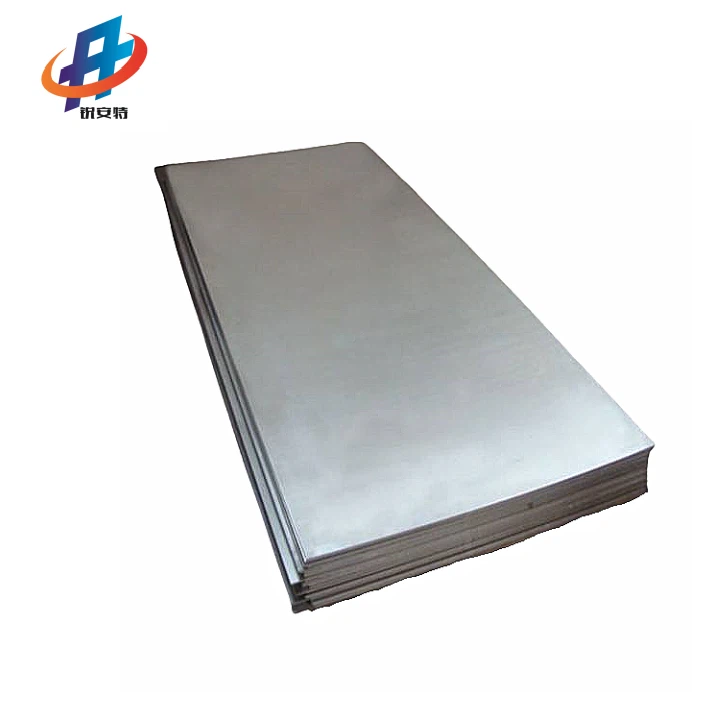
Ensuring the consistency of properties in a batch of titanium alloy plates is a critical aspect for us as a titanium alloy plate supplier. The quality and consistency of these plates directly impact the performance and reliability of the end - products in various industries such as aerospace, medical, and marine. In this blog, we will explore the key factors and strategies to achieve and maintain the property consistency of titanium alloy plates.
1. Raw Material Selection
The journey to consistent titanium alloy plates begins with the careful selection of raw materials. Titanium alloys are composed of titanium and other alloying elements such as aluminum, vanadium, and molybdenum. The purity and composition of these raw materials play a fundamental role in determining the final properties of the plates.
We source our raw materials from trusted suppliers who adhere to strict quality control standards. For example, when producing Gr 5 Titanium Sheet, which is also known as Ti - 6Al - 4V, we ensure that the aluminum and vanadium content is within the specified range. Any deviation in the alloying element concentration can lead to variations in mechanical properties such as strength, ductility, and corrosion resistance.
We conduct thorough chemical analysis of the incoming raw materials using advanced techniques like spectroscopy. This allows us to verify the exact composition and detect any impurities. By starting with high - quality and consistent raw materials, we lay a solid foundation for producing titanium alloy plates with uniform properties.
2. Melting and Casting Process
The melting and casting process is a crucial step where the raw materials are transformed into ingots. During this process, it is essential to ensure homogeneous mixing of the alloying elements and minimize the formation of defects.
We use advanced melting technologies such as vacuum arc remelting (VAR) for titanium alloys. VAR provides a controlled environment with high purity, reducing the risk of contamination from oxygen, nitrogen, and other impurities. The melting process is carefully monitored to maintain a stable temperature and stirring rate, which helps in achieving a uniform distribution of alloying elements throughout the ingot.
After melting, the casting process also requires strict control. The mold design, pouring temperature, and solidification rate all affect the microstructure and properties of the ingot. For instance, a slow and controlled solidification rate can promote the formation of a fine - grained microstructure, which is beneficial for improving the mechanical properties of the final titanium alloy plates.
3. Hot Rolling and Forging
Hot rolling and forging are used to shape the ingots into plates. These processes not only change the geometry of the material but also refine the microstructure, which has a significant impact on the mechanical properties.
During hot rolling, the temperature, reduction ratio, and rolling speed need to be precisely controlled. A proper reduction ratio helps to break down the coarse grains in the ingot and promote the formation of a more uniform and fine - grained microstructure. The rolling temperature should be maintained within the optimal range for the specific titanium alloy. For example, for BT9 Titanium Plate, the hot - rolling temperature is carefully selected to ensure the desired phase transformation and grain refinement.
Forging is another important process that can improve the density and homogeneity of the titanium alloy. It can also enhance the mechanical properties by aligning the grains in a specific direction. By controlling the forging parameters such as the forging force, number of blows, and deformation rate, we can produce plates with consistent properties.
4. Heat Treatment
Heat treatment is a key step to optimize the mechanical properties of titanium alloy plates. Different heat treatment processes, such as annealing, solution treatment, and aging, can be used depending on the specific requirements of the alloy and the application.
Annealing is often used to relieve internal stresses and improve the ductility of the plates. The annealing temperature and time are critical factors. If the annealing temperature is too high or the time is too long, it may lead to grain growth and a decrease in strength. On the other hand, if the conditions are not sufficient, the internal stresses may not be fully relieved.
Solution treatment and aging are commonly used for precipitation - hardenable titanium alloys. During solution treatment, the alloy is heated to a high temperature to dissolve the precipitates, and then rapidly cooled to form a supersaturated solid solution. Subsequently, aging is carried out at a lower temperature to promote the precipitation of fine particles, which can significantly increase the strength of the alloy.
We carefully design and control the heat treatment cycles for each batch of titanium alloy plates. By using advanced heat treatment furnaces with precise temperature control and monitoring systems, we can ensure that all the plates in a batch receive the same treatment, resulting in consistent mechanical properties.
5. Quality Control and Testing
Quality control and testing are essential throughout the production process to ensure the consistency of properties in a batch of titanium alloy plates.
We perform a series of non - destructive testing (NDT) methods on the plates, such as ultrasonic testing (UT) and eddy current testing (ECT). UT can detect internal defects such as cracks and porosity, while ECT is used to detect surface and near - surface defects. These tests help us to identify any defective plates early in the production process and take corrective actions.
In addition to NDT, we also conduct mechanical testing, including tensile testing, hardness testing, and impact testing. Tensile testing provides information about the strength and ductility of the plates, while hardness testing gives an indication of the material's resistance to deformation. Impact testing measures the ability of the plates to absorb energy under impact loading.
We take multiple samples from different positions within each plate and from different plates in a batch for testing. By analyzing the test results, we can determine if the properties of the plates are within the specified range. If any deviations are found, we investigate the root cause and make adjustments to the production process.
6. Process Documentation and Traceability
Maintaining detailed process documentation and traceability is an important aspect of ensuring property consistency. We record all the parameters and conditions during each production step, including raw material information, melting and casting parameters, hot rolling and forging settings, and heat treatment cycles.
This documentation allows us to track the production history of each batch of titanium alloy plates. In case of any quality issues or customer feedback, we can quickly review the process data and identify potential areas for improvement. It also helps us to ensure that the same production process is replicated for future batches, leading to consistent product quality.
7. Employee Training and Skill Development
Our employees play a crucial role in ensuring the consistency of titanium alloy plate properties. We provide regular training to our production staff to keep them updated on the latest production techniques, quality control methods, and safety regulations.
Well - trained employees are more likely to operate the equipment correctly and follow the standard operating procedures. They can also identify potential problems during the production process and take appropriate actions in a timely manner. By investing in employee training and skill development, we enhance the overall quality of our production process and the consistency of our titanium alloy plates.
In conclusion, ensuring the consistency of properties in a batch of titanium alloy plates requires a comprehensive approach that covers every stage of the production process, from raw material selection to final quality control. By implementing strict quality control measures, using advanced technologies, and investing in employee training, we can produce high - quality Gr 5 Titanium Sheet and other titanium alloy plates with uniform properties.
If you are in need of high - quality and consistent titanium alloy plates for your project, we are here to serve you. Our team of experts can provide you with detailed technical support and customized solutions. Contact us to start a procurement negotiation and experience the superior quality of our products.

References
- Boyer, R. R., Welsch, G., & Collings, E. W. (1994). Materials Properties Handbook: Titanium Alloys. ASM International.
- Schijve, J. (2009). Fatigue of Structures and Materials. Springer.
- ASTM International. (2023). Standards related to titanium alloys and their testing methods.
Send Inquiry