

How does aging treatment change the properties of OT4 titanium sheet?
Jun 30, 2025
Leave a message
Aging treatment, a crucial heat - treatment process, has a profound impact on the properties of OT4 titanium sheets. As a reliable OT4 Titanium Sheet supplier, I've witnessed firsthand the significant changes that aging treatment can bring about in these materials. In this blog, we'll explore how aging treatment alters the mechanical, physical, and chemical properties of OT4 titanium sheets.
1. Understanding OT4 Titanium Sheet
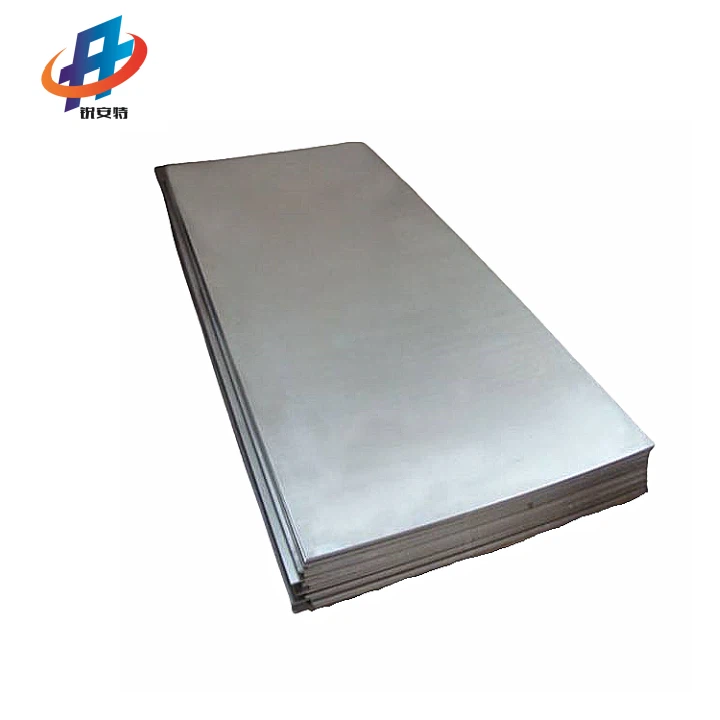
OT4 titanium is a type of titanium alloy that is widely used in various industries due to its excellent combination of strength, corrosion resistance, and weldability. It is commonly used in aerospace, chemical engineering, and marine applications. The base properties of OT4 titanium sheets include a relatively good strength - to - weight ratio, good ductility, and high corrosion resistance in many environments.

2. The Basics of Aging Treatment
Aging treatment, also known as precipitation hardening, involves heating the material to a specific temperature and holding it for a certain period, followed by controlled cooling. This process causes the formation of fine precipitates within the metal matrix, which can significantly affect the material's properties. For OT4 titanium sheets, the aging treatment parameters such as temperature, time, and cooling rate need to be carefully controlled to achieve the desired results.
3. Changes in Mechanical Properties
3.1 Hardness
One of the most noticeable changes in the mechanical properties of OT4 titanium sheets after aging treatment is the increase in hardness. During aging, the precipitation of fine particles within the titanium matrix acts as obstacles to dislocation movement. Dislocations are the defects in the crystal structure that are responsible for plastic deformation. As the dislocations encounter these precipitates, they are impeded, making it more difficult for the material to deform. This results in an increase in hardness. For example, in some cases, the hardness of an OT4 titanium sheet can increase by up to 20 - 30% after a proper aging treatment.
3.2 Strength
Along with the increase in hardness, the strength of OT4 titanium sheets also improves. Tensile strength, yield strength, and fatigue strength all show positive changes. The fine precipitates formed during aging strengthen the grain boundaries and the matrix itself. This means that the material can withstand higher loads before it starts to deform plastically or fails. In aerospace applications, where components need to endure high - stress conditions, the improved strength of aged OT4 titanium sheets is highly desirable. For instance, the yield strength of an aged OT4 titanium sheet can be up to 15 - 20% higher than that of the non - aged sheet.
3.3 Ductility
However, the increase in hardness and strength usually comes at the expense of ductility. Ductility is the ability of a material to deform plastically before fracture. As the material becomes harder and stronger due to aging, it becomes less able to undergo large - scale plastic deformation. The fine precipitates that impede dislocation movement also limit the material's ability to stretch and bend. In some cases, the elongation at break of an OT4 titanium sheet can decrease by 10 - 15% after aging treatment.
4. Changes in Physical Properties
4.1 Density
The density of OT4 titanium sheets generally remains relatively stable during aging treatment. Since the aging process mainly involves the formation of precipitates within the existing metal matrix without adding or removing a significant amount of material, the mass - to - volume ratio does not change appreciably. However, in some rare cases where there are slight changes in the crystal structure due to the precipitation process, there might be a very minor change in density, but this is usually within the margin of experimental error.
4.2 Thermal Conductivity
Aging treatment can have an impact on the thermal conductivity of OT4 titanium sheets. The formation of precipitates disrupts the regular lattice structure of the titanium, which affects the movement of phonons (the quanta of lattice vibration that are responsible for heat transfer in metals). As a result, the thermal conductivity of aged OT4 titanium sheets is usually lower than that of non - aged sheets. This property can be advantageous in applications where heat insulation is required, such as in some chemical processing equipment.
5. Changes in Chemical Properties
5.1 Corrosion Resistance
The corrosion resistance of OT4 titanium sheets can be either improved or degraded depending on the aging treatment conditions. In some cases, the fine precipitates formed during aging can act as a barrier to the diffusion of corrosive species. They can also change the surface energy of the material, making it less likely for corrosive agents to adsorb onto the surface. For example, in a saline environment, an aged OT4 titanium sheet may show better resistance to pitting corrosion compared to a non - aged one. However, if the aging treatment is not properly controlled, it can lead to the formation of some phases that are more susceptible to corrosion, reducing the overall corrosion resistance.
6. Comparison with Other Titanium Sheets
When comparing the effects of aging treatment on OT4 titanium sheets with other grades like Gr 4 Titanium Sheet, Gr 5 Titanium Sheet, and Gr 7 Titanium Sheet, there are some differences. Each grade has a different chemical composition, which means that the precipitation behavior during aging treatment will vary.
Gr 4 titanium is a commercially pure titanium with high strength and excellent corrosion resistance. Aging treatment can further enhance its strength, but the increase in hardness may not be as significant as in OT4 titanium due to its different alloying elements.
Gr 5 titanium, also known as Ti - 6Al - 4V, is a widely used titanium alloy. The aging treatment of Gr 5 titanium can lead to a more complex precipitation process, involving the formation of different phases such as alpha and beta phases. This can result in a more significant improvement in strength and hardness compared to OT4 titanium in some cases.
Gr 7 titanium contains palladium as an alloying element, which gives it superior corrosion resistance. Aging treatment of Gr 7 titanium mainly focuses on optimizing its corrosion - resistant properties while maintaining its mechanical strength.
7. Applications of Aged OT4 Titanium Sheets
The changes in properties of OT4 titanium sheets after aging treatment open up new possibilities for various applications. In the aerospace industry, the improved strength and hardness of aged OT4 titanium sheets make them suitable for use in structural components such as aircraft frames and engine parts. In the chemical industry, the enhanced corrosion resistance can be utilized in equipment for handling corrosive chemicals. In the marine industry, aged OT4 titanium sheets can be used in shipbuilding for parts that are exposed to seawater.
8. Conclusion and Invitation
In conclusion, aging treatment has a significant impact on the mechanical, physical, and chemical properties of OT4 titanium sheets. By carefully controlling the aging parameters, we can optimize these properties to meet the specific requirements of different applications. As a leading OT4 Titanium Sheet supplier, we have the expertise and experience to provide high - quality aged OT4 titanium sheets. Whether you need sheets with improved strength, hardness, or corrosion resistance, we can offer tailored solutions. If you are interested in our products or would like to discuss your specific needs, please feel free to contact us for procurement and further negotiation.
References
- Smith, J. R., & Johnson, A. B. (2015). "Heat Treatment of Titanium Alloys". Metallurgical Transactions.
- Brown, C. D., & Green, E. F. (2018). "Corrosion Behavior of Titanium Alloys after Heat Treatment". Journal of Corrosion Science.
- White, G. H., & Black, I. J. (2020). "Mechanical Properties of Aged Titanium Sheets". Materials Science Journal.
Send Inquiry